Armenia on the eve of revolt
Why a lost battle became a lasting symbol
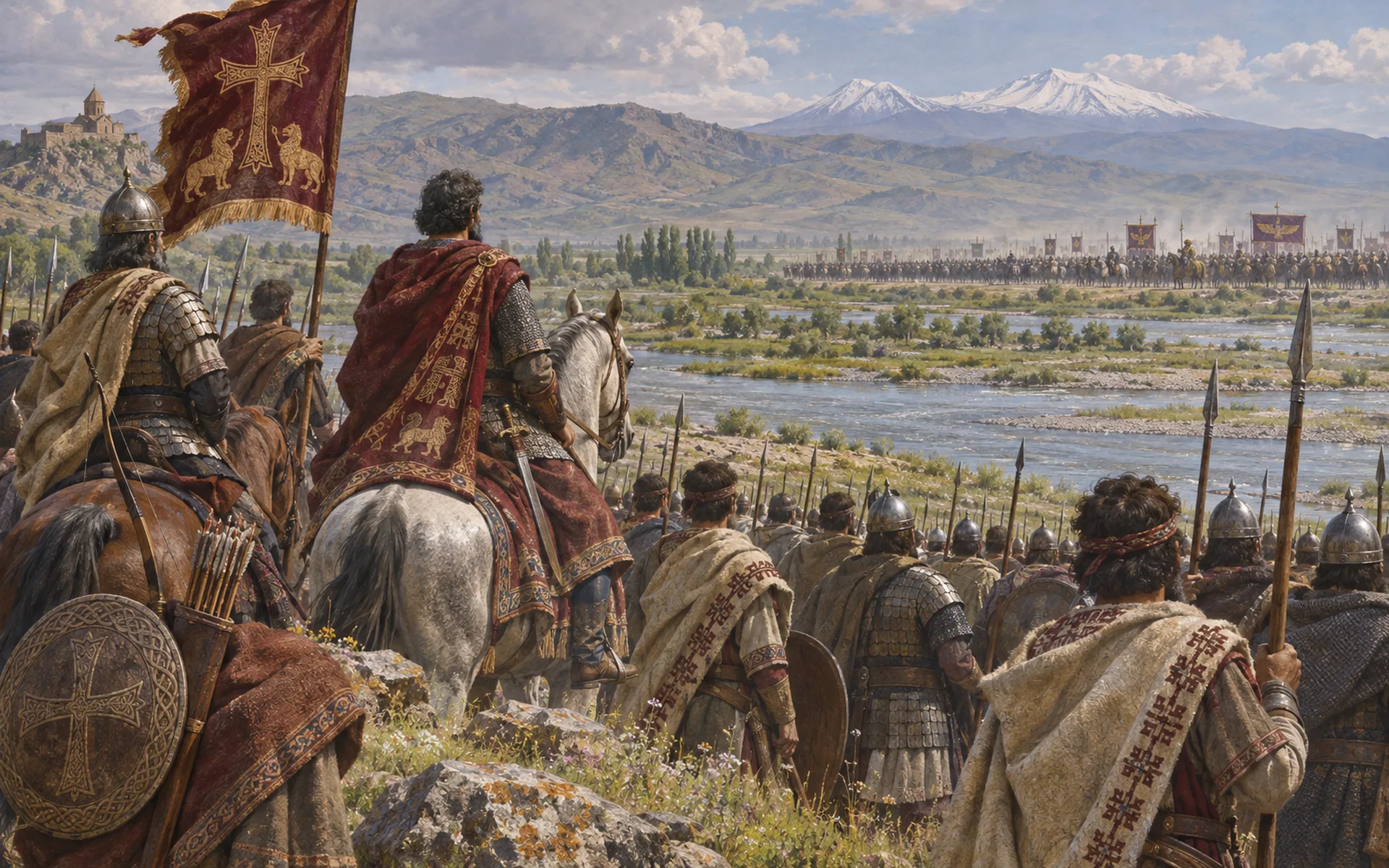
In 451, an Armenian force led by Vardan Mamikonian fought a Sasanian imperial army on the plain of Avarayr. Vardan and other commanders died, and the Armenian army did not achieve a battlefield victory. Yet Avarayr became one of the most enduring symbols of Armenian historical memory. Its significance lies in the relationship between military defeat, resistance to religious coercion, and the survival of a community’s institutions and commitments.
These are different kinds of outcome. A commander may lose control of the field while the political problem that caused the conflict remains unresolved. A later generation may remember the fallen for what they defended rather than for territory they captured. Understanding Avarayr requires both perspectives. We should neither rewrite the battle as an uncomplicated military victory nor assume that defeat made the resistance meaningless. The question is how an event continued to influence political action, religious life, literature, and education long after the fighting ended.
Armenia without an Armenian king
By the fifth century, Armenia stood between the Eastern Roman and Sasanian empires. The division of Armenia in 387 had placed most of the country within the Iranian sphere. In 428, the Armenian Arsacid monarchy came to an end in the Sasanian-controlled part. This did not mean that every local institution disappeared. Aristocratic houses, known as nakharar families, retained estates, followers, and military responsibilities. The Church also possessed a substantial place in communal life.
Imperial rule therefore operated through relationships with local elites as well as direct authority. The marzpan was the governor representing the imperial order; the sparapet was a major military office associated with command of Armenian forces. These terms describe a political structure different from a modern independent state.
The uprising must be situated within this arrangement. Its participants were defending religious practice and their community’s position while also responding to pressures from a powerful imperial government. Local autonomy, aristocratic interests, military service, and faith were intertwined rather than separate topics.
Religious pressure and political authority
Under the Sasanian ruler Yazdegerd II, demands that Armenians abandon Christianity and accept the imperial religious framework provoked resistance. The crisis intensified in the late 440s. Armenian narratives describe pressure at court, demands directed at leading nobles, and efforts to impose religious change within the country. For Christian clergy and many laypeople, these demands threatened more than a private opinion: they concerned worship, teaching, communal institutions, and the continuity of inherited commitments.
A careful account must also distinguish a state policy from an entire population. The conflict was not proof that every Iranian or every Zoroastrian shared identical views or participated in coercion. Empires included different groups and changing policies. The object of historical criticism here is a particular exercise of political power.
From the imperial perspective, religious conformity could be connected with loyalty and control. For opponents of the policy, refusing conversion could become an assertion that political obedience had limits. That tension helps explain why the dispute developed into armed resistance rather than remaining a disagreement among theologians.
From protest to organized resistance
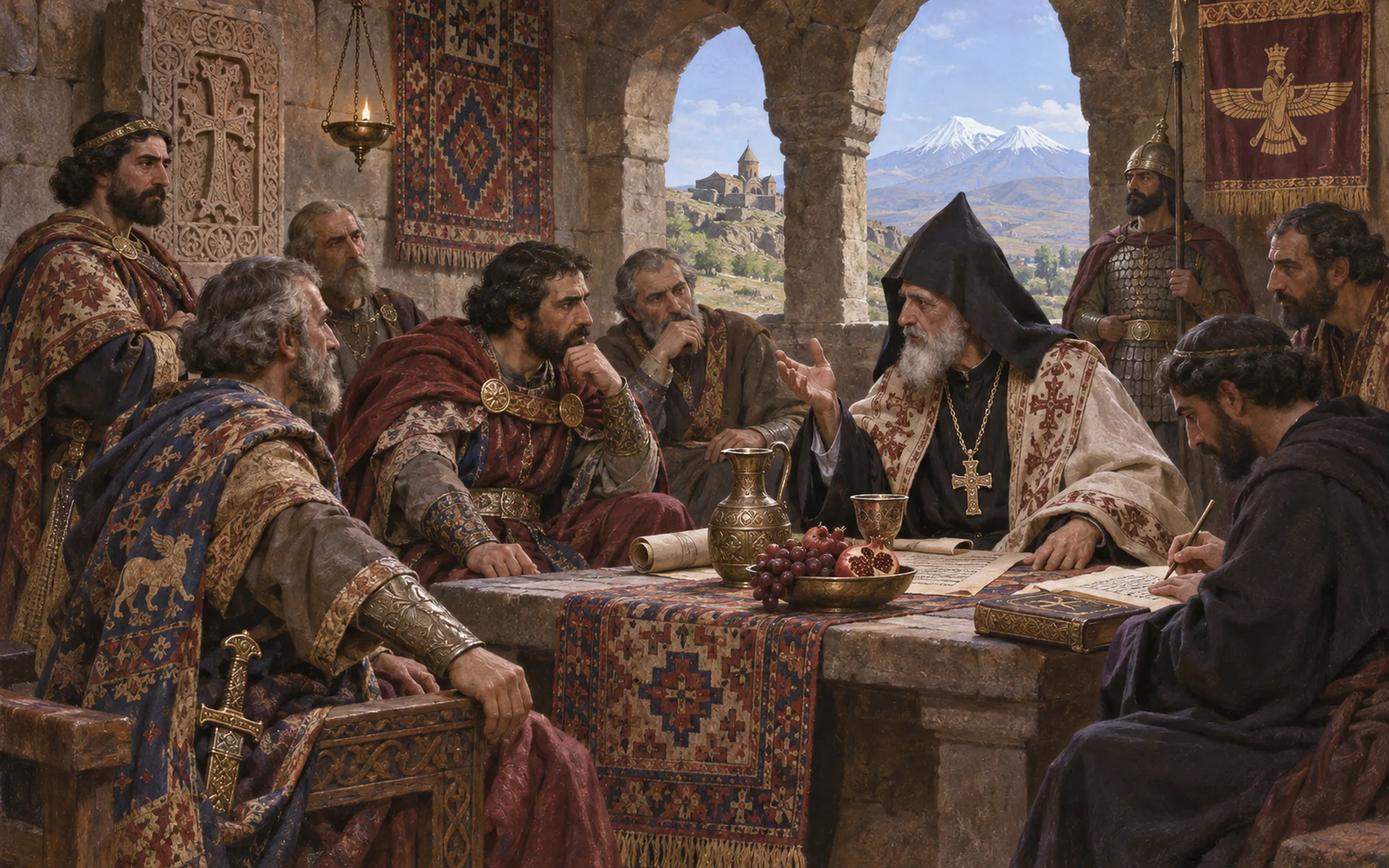
The Armenian accounts present resistance as a process involving nobles, bishops, priests, soldiers, and wider communities. Messages, meetings, promises, and divisions preceded the battle. Military action was only one part of the struggle. Organizing support required communication between estates and regions, agreement about leadership, and decisions about how far to challenge the imperial government.
Vardan Mamikonian emerged as the principal military leader of the resistance. Clergy, including Ghevond, helped articulate and sustain its religious purpose. Their participation should not make us forget the practical work involved: assembling contingents, securing provisions, maintaining cohesion, and deciding where to confront an advancing force.
Appeals to the Eastern Roman Empire did not bring the military assistance the rebels sought. This placed greater weight on local resources. When studying alliances, distinguish a request for help from help actually received. A shared religion did not automatically produce a shared strategic decision. Governments also considered their own security, commitments, and the dangers of opening another conflict.