Derenik Demirchyan worked across fiction, drama and poetry. His writing moves between collective history and the moral choices of ordinary people, often using humour to uncover uncomfortable truths.
Derenik Demirchyan
Person
Type

Life and context
Born in Akhalkalaki in 1877, he studied in Armenian institutions and later in Geneva. He participated in Tumanyan's Vernatun literary circle. His mature career unfolded in Yerevan, where he died in 1956. His house-museum preserves both his literary and theatrical legacy.
Major works
Vardanank reimagines the fifth-century struggle associated with Vardan Mamikonyan and the Battle of Avarayr. It is a historical novel concerned with faith, leadership and collective endurance, not a contemporary record of those events.
Nazar the Brave uses a familiar folktale figure to question how cowardice can be mistaken for heroism and how authority is manufactured. The Unnecessary One turns a family crisis into a severe test of compassion.
Literary legacy
Demirchyan's range prevents a single heroic reading of his work. Beside monumental history stands sharp scrutiny of vanity and exclusion. His fiction asks readers to judge not only public declarations but also the treatment of vulnerable people.
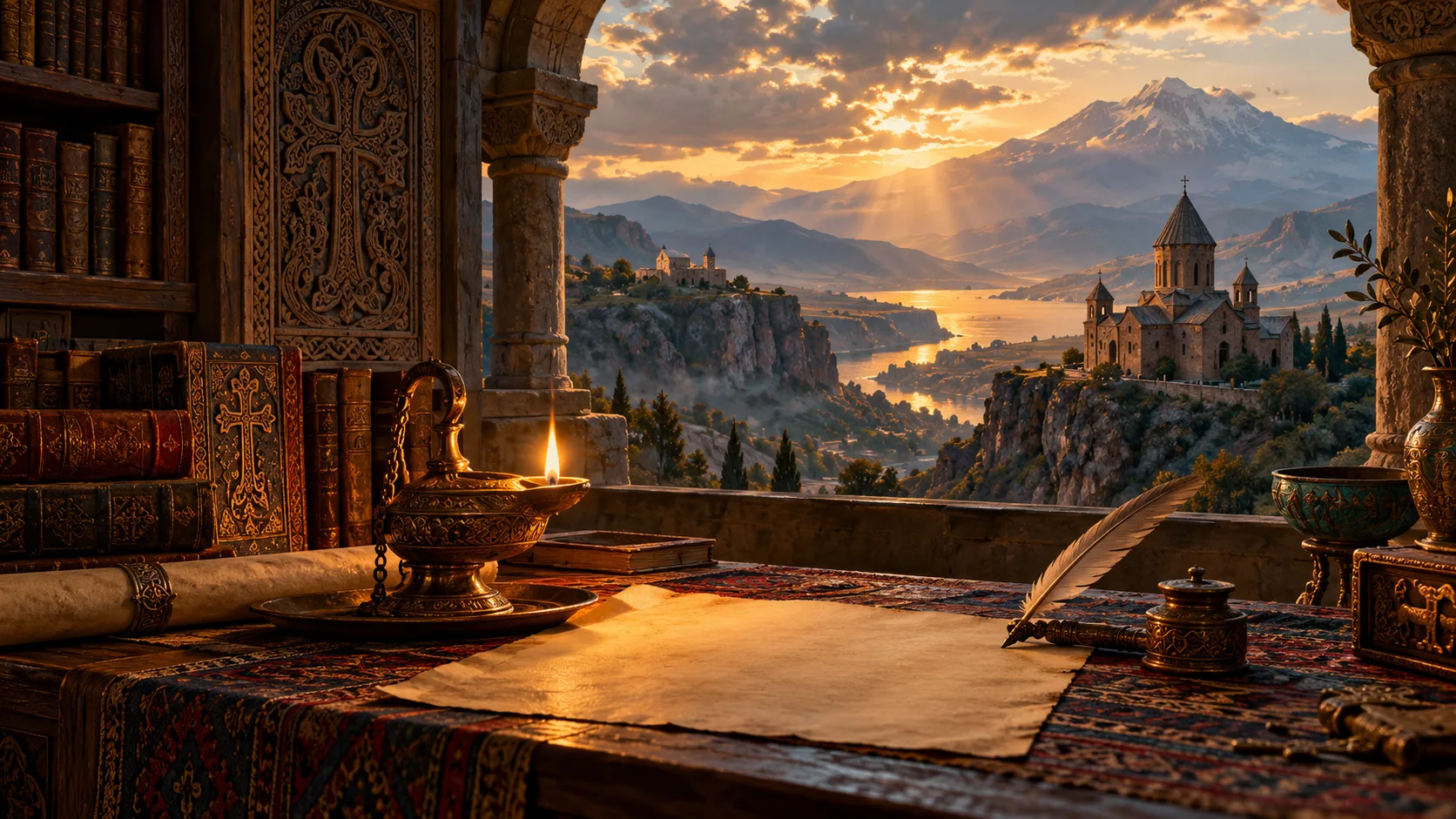
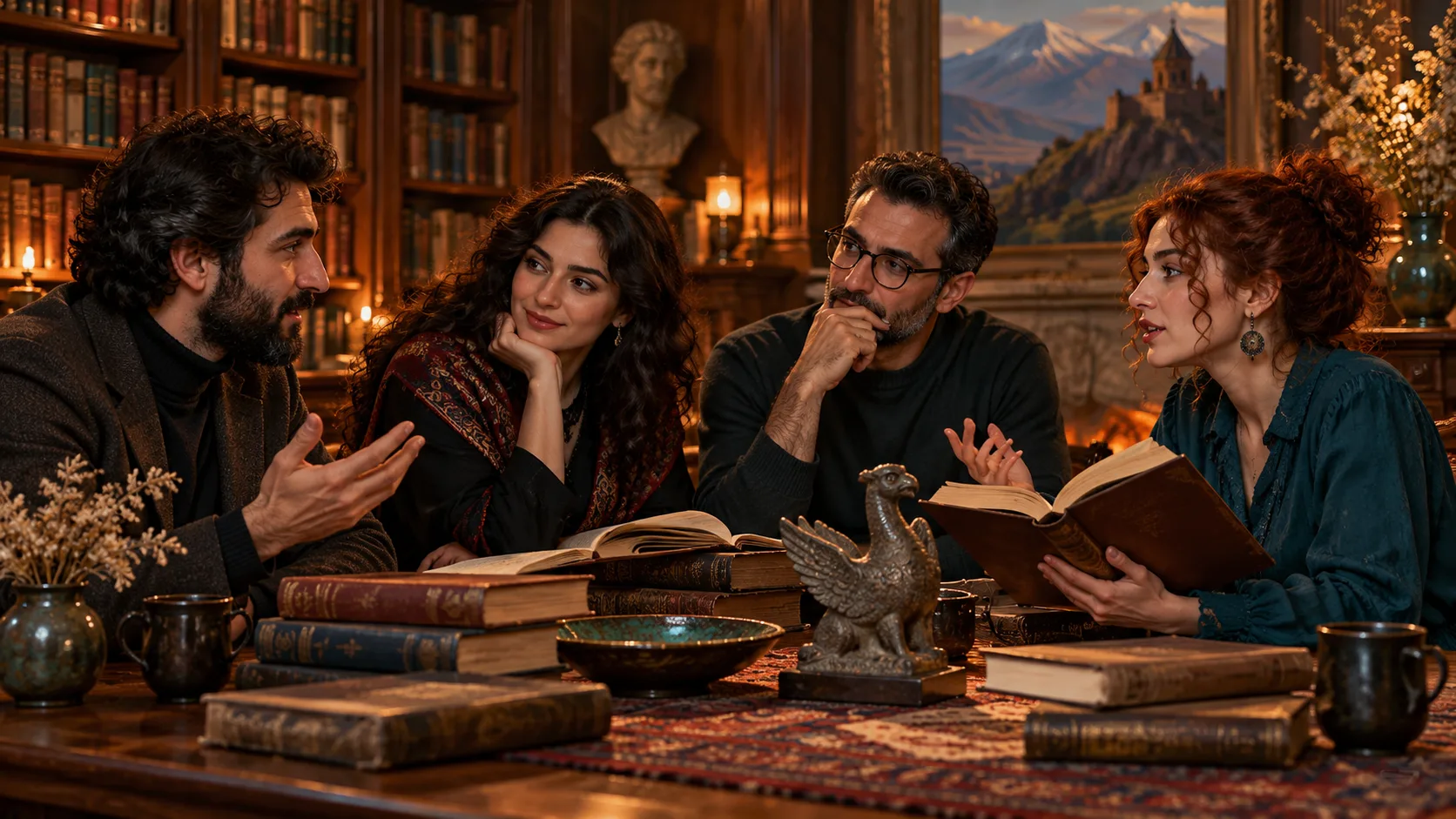
The cover and section images are AI-generated symbolic illustrations. The gallery portrait comes from a historical source.
Reading the works closely
Demirchyan examines responsibility at different scales: a nation's fate, public power or a decision within a family. The title of The Superfluous One asks who can declare another person unnecessary. Distinguish explaining a choice under danger from morally excusing it.
In Nazar the Brave, satire exposes the gap between ability and reputation. Study the surrounding people as well as Nazar: why do they believe, obey or benefit from his fame? Vardanank gives fifth-century history dramatic voices and conflicts, but its dialogue is a novelist's reconstruction, not automatically historical testimony. Comparing these genres shows how laughter, anxiety and sympathy can approach related ethical questions.
Read, reflect and investigate
Compare an episode in Tumanyan's and Demirchyan's versions of Nazar. What changes when narration becomes stage dialogue? For The Superfluous One, write one sentence explaining a decision and another judging it. In a Vardanank report, separate historical evidence from observations about fictional characterization.
This article was created using artificial intelligence.
For suggestions regarding collaboration, content, or the further development of this page, please contact the Armenian Treasures Foundation.
Photography Archive
Gallery
Explore more entries
Back to Writers