
Gabriel Sundukyan (1825–1912) brought the speech and struggles of ordinary people into Armenian drama. His theatre exposes the unequal power of money while preserving the warmth and humour of daily life.
Gabriel Sundukyan
Person
Type
Life and context
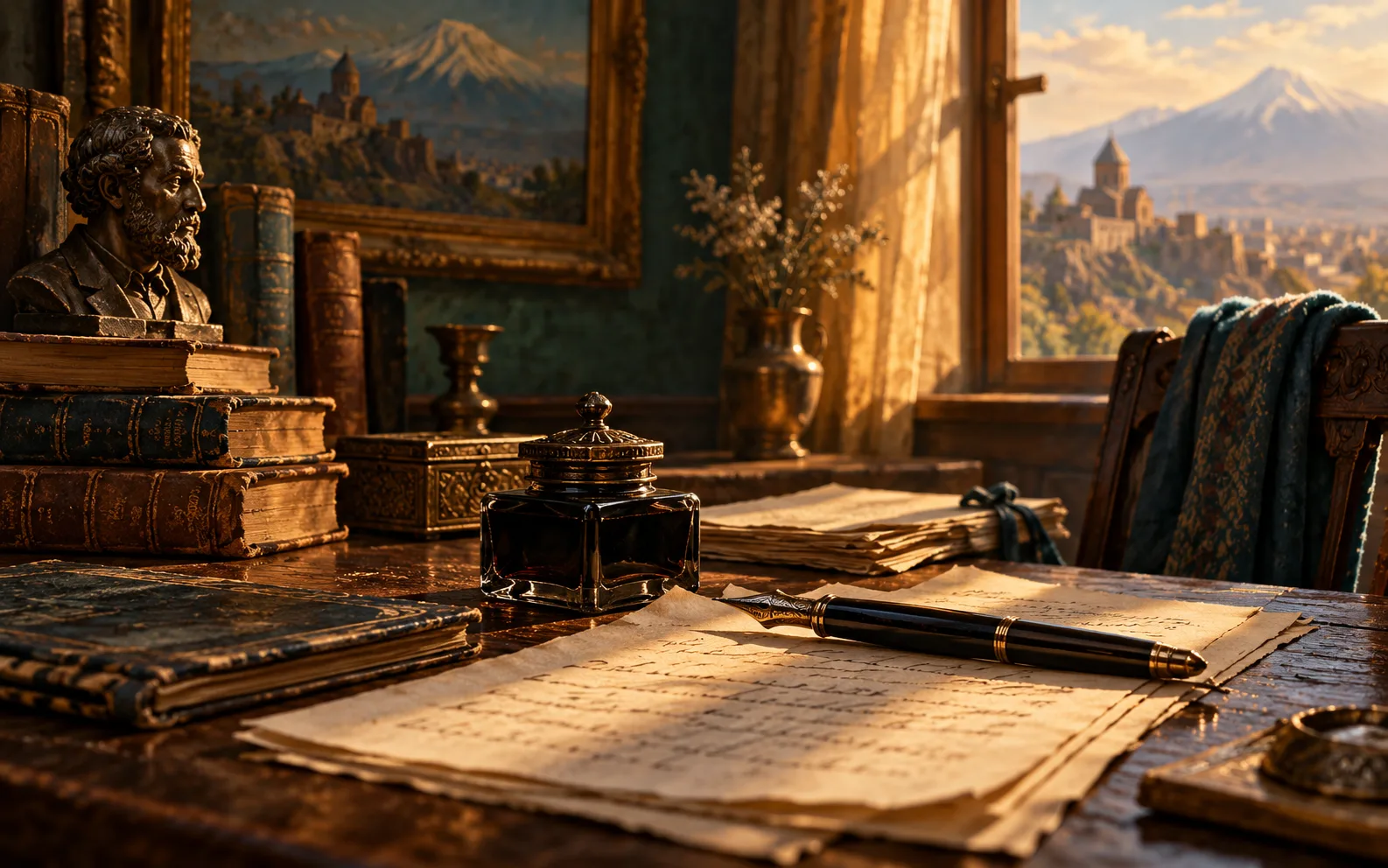
Tiflis, where he was born and spent much of his life, shaped his dramatic world. Its tradespeople, families and multilingual streets supplied a setting in which social change could be seen through individual destinies.
Major works
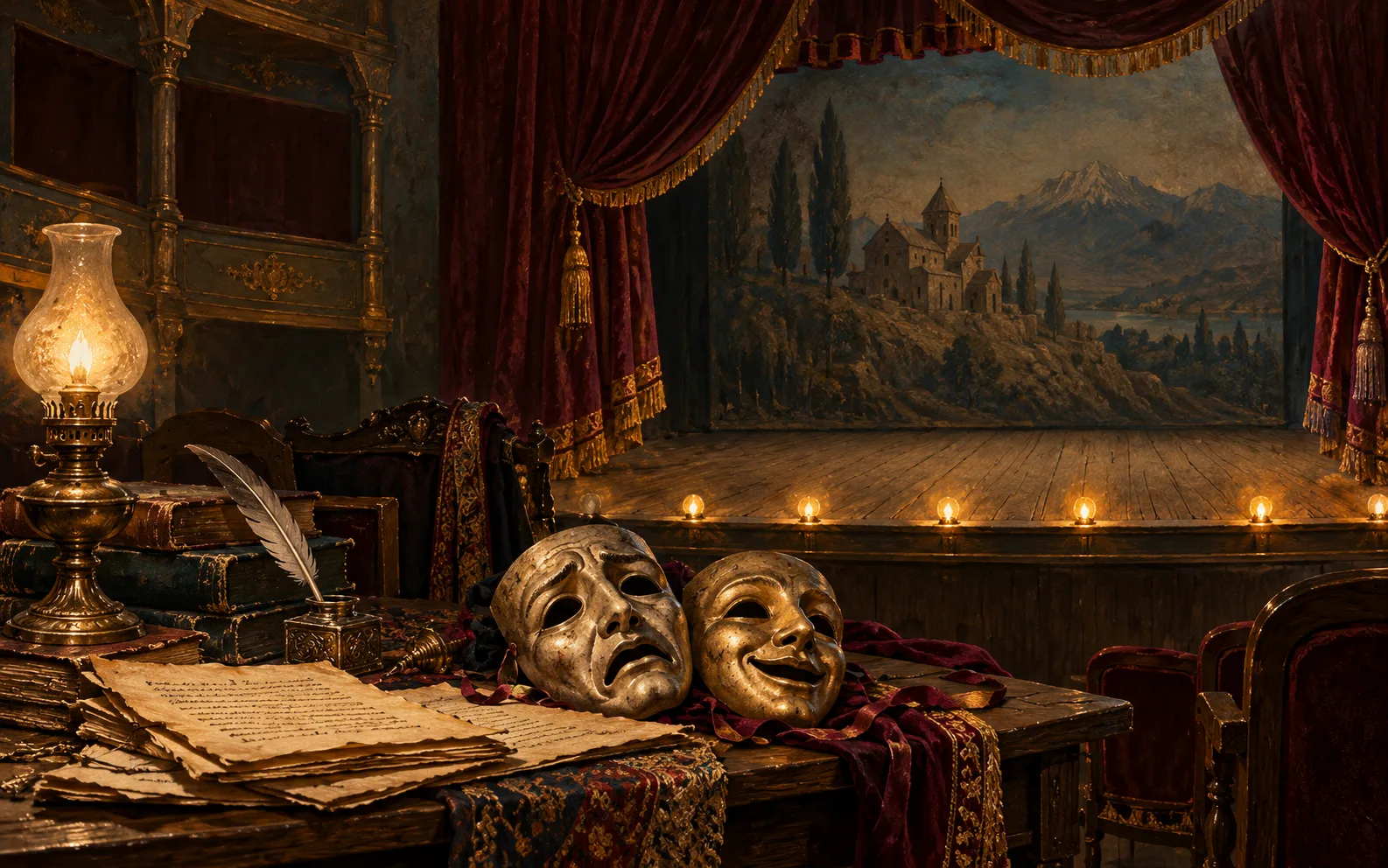
Pepo centres on an honest fisherman confronting a wealthy merchant. Khatabala and The Ruined Hearth also explore money, marriage and moral responsibility. His use of local speech gives conflict a precise social texture.
Literary legacy
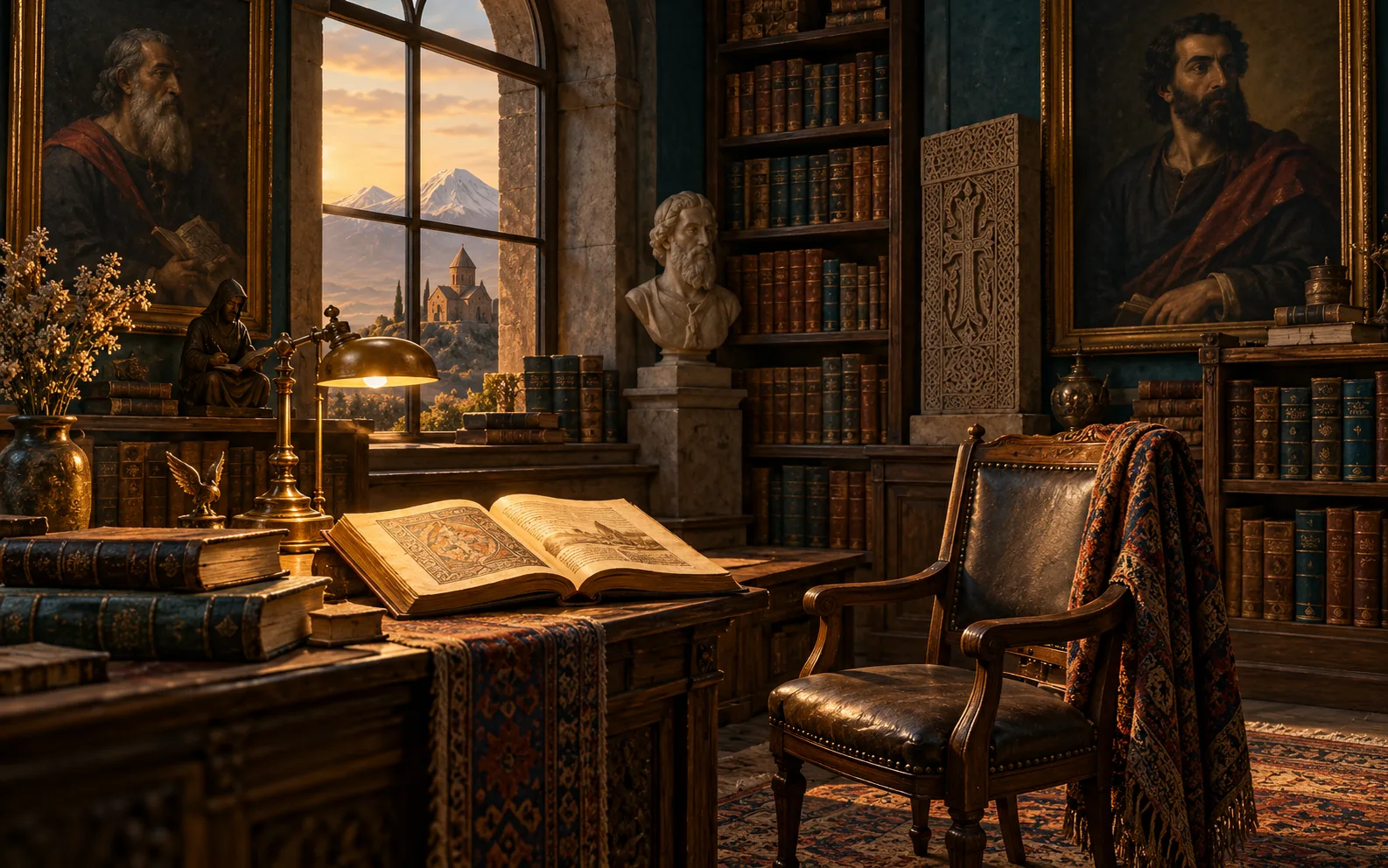
A central figure in Armenian dramatic realism, Sundukyan made the stage a place to examine justice and dignity. His plays remain part of the conversation between literature and performance.
The portrait and accompanying scenes are generated artistic interpretations; they are not historical photographs.
Reading the works closely
Sundukyan reveals character through dialogue, action and stage situations. Ask what a line changes in another person's behaviour. Pepo centres on a poor fisherman's conflict with the wealthy merchant Zimzimov. The dispute over a debt and its written evidence exposes unequal power: being truthful does not guarantee being heard.
Money, reputation, testimony and documents give the characters different resources. Tiflis speech connects them to work and community; dialect does not mean simple thinking. Khatabala and The Ruined Hearth also examine material interests and family responsibility. A performance adds the choices of actors and directors, so it should be distinguished from the written play.
Read, reflect and investigate
For one scene, list each character's aim, fear and means of persuasion. Support these with dialogue or action. Read the scene with different emphases and explain which interpretation fits the text. When discussing a film or production, identify it as an adaptation rather than an unchanged copy.
This article was created using artificial intelligence.
For suggestions regarding collaboration, content, or the further development of this page, please contact the Armenian Treasures Foundation.
Explore more entries
Back to Writers