
Grigor Narekatsi (c. 950–1003) gave Armenian spiritual poetry an extraordinary language of self-examination. His voice moves between human vulnerability and the hope of divine mercy.
Grigor Narekatsi
Person
Type
Life and context
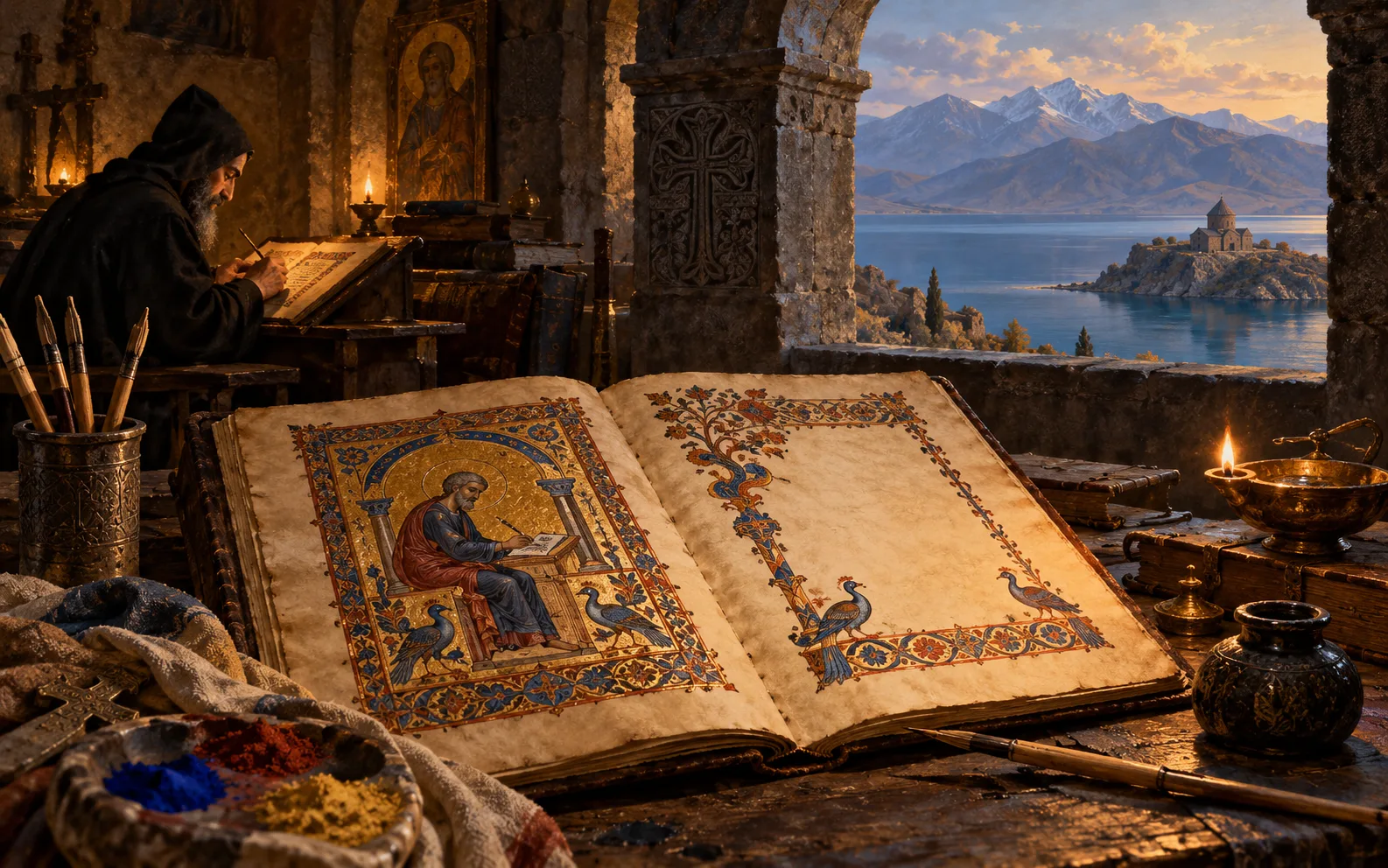
He lived and worked at the monastery of Narek, near Lake Van. Its scholarly and liturgical culture shaped his writing, which joins theological learning to intensely personal expression.
Major works
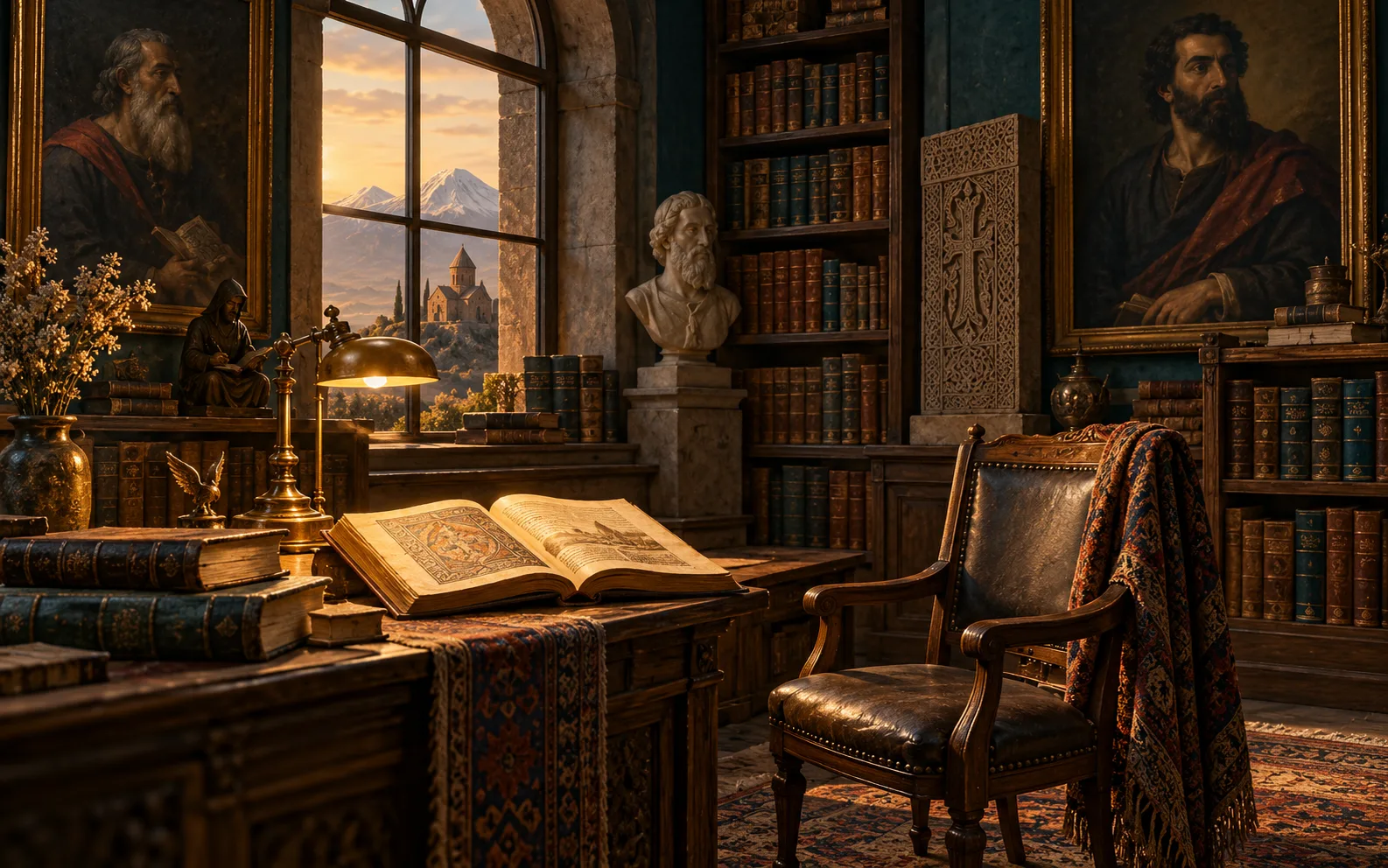
The Book of Lamentations, commonly called Narek, unfolds through ninety-five chapters of prayer. His hymns and odes also reveal a vivid poetic imagination, musical language and close attention to the natural world.

Literary legacy
Read for centuries in churches and homes, Narek became both a literary monument and a source of spiritual consolation. The portrait and accompanying scenes are generated artistic interpretations, not historical photographs.
Reading the works closely
The Book of Lamentations belongs to the world of medieval Christian prayer, not stage tragedy. Its speaker examines human imperfection while seeking mercy. The first-person voice can speak for shared human weakness; individual confessions are not automatically evidence about Narekatsi's biography.
Stormy seas, endangered ships and images of illness can express spiritual states. Follow how one image intensifies another and how fear moves toward hope. His odes also contain celebratory colour and movement, so suffering does not define the whole legacy. The original is Classical Armenian; modern translations aid understanding but cannot reproduce every sound. Centuries of devotional use are a cultural tradition, not proof of medical effectiveness.
Read, reflect and investigate
Read a short annotated passage and identify difficulty, request and hope. Explain one metaphor in ordinary language. Compare a Classical Armenian line with a modern rendering, naming the translator in your project. Study the text respectfully without assuming all readers share the same religious beliefs.
This article was created using artificial intelligence.
For suggestions regarding collaboration, content, or the further development of this page, please contact the Armenian Treasures Foundation.
Explore more entries
Back to Writers