
Hamo Sahyan (1914–1993) made the Armenian landscape a language of memory and self-understanding. A rock, a tree or a stream can carry the emotional weight of an entire life in his poetry.
Hamo Sahyan
Person
Type
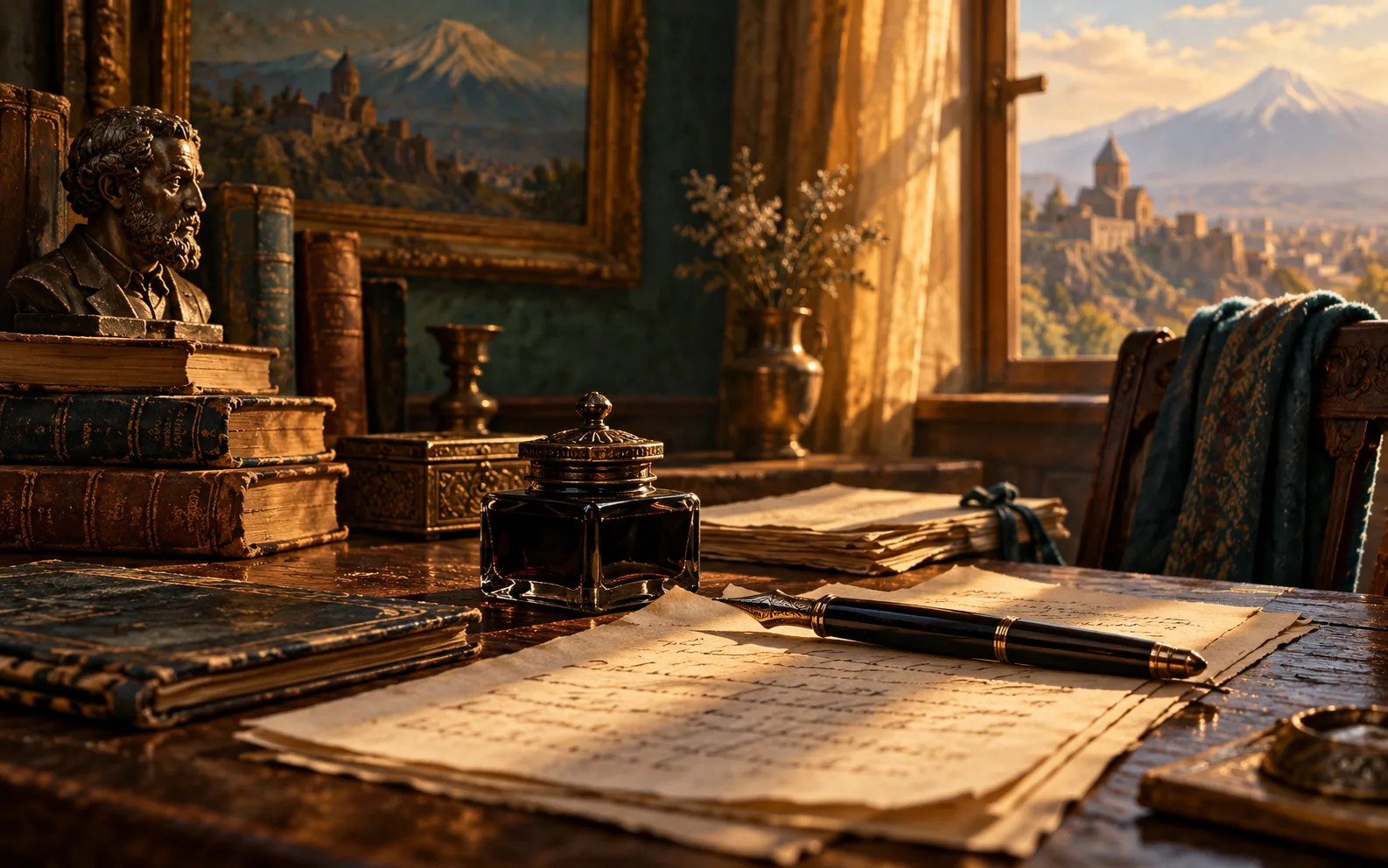
Life and context
Born Hmayak Grigoryan in the village of Lor, he later studied in Baku and served during the Second World War. Journalism and editorial work accompanied a poetic career rooted in memories of childhood.
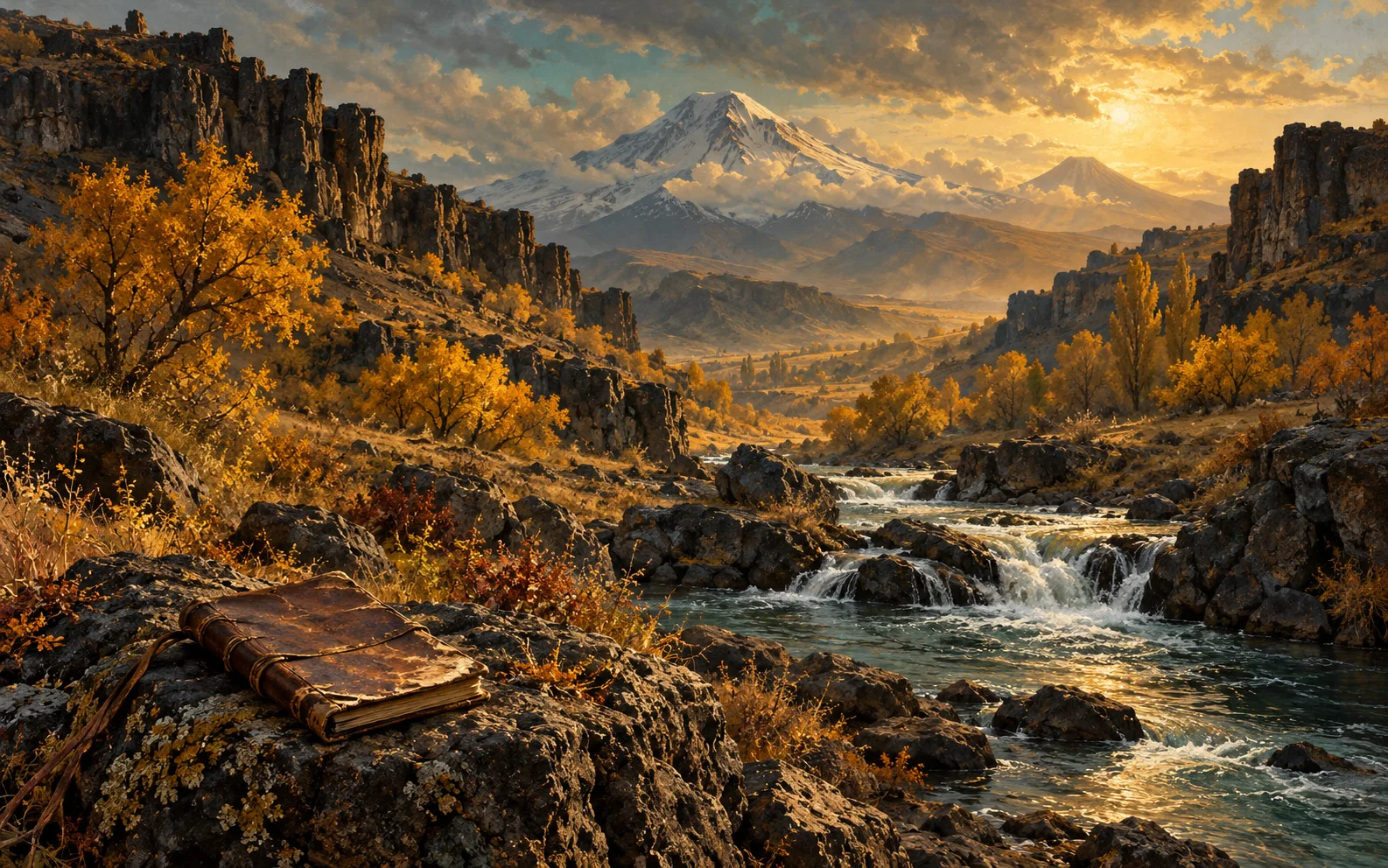
Major works
On the Banks of the Vorotan introduced his early work. The Song of the Cliffs and Open, Sesame reveal a mature voice in which nature is not scenery but a living partner in thought.
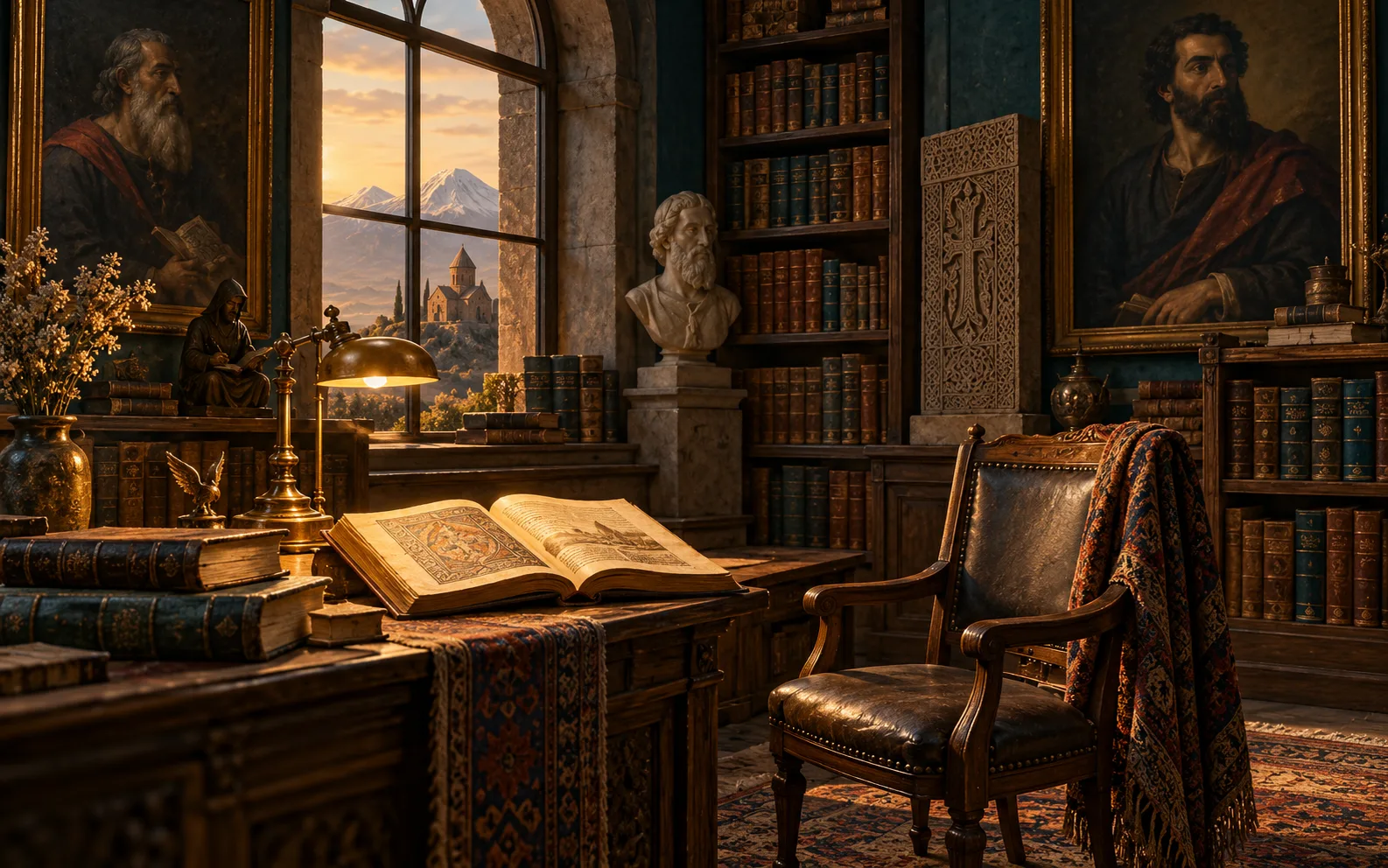
Literary legacy
Sahyan's clarity invites slow reading. His poems connect attachment to place with the passage of time, showing how ordinary natural details preserve what people fear losing.
The portrait and accompanying scenes are generated artistic interpretations; they are not historical photographs.
Reading the works closely
In Sahyan, nature is often a partner rather than a backdrop. A rock, tree or river can gain movement and human associations while retaining its concrete features. Read both layers together. Grandfather gives everyday labour dignity through a grandchild's perspective; the figure's value comes from work and conduct rather than wealth or rank.
In The Day Grew Dark, the remembered family meal reveals a change from presence to absence. Memory warms the scene but also makes passing time perceptible. The Song of the Cliffs and Open, Sesame invite exploration of this inner landscape. Their apparently simple language depends on precise attention to names, textures and moments.
Read, reflect and investigate
Identify words of movement and work in Grandfather. Locate the emotional turn in The Day Grew Dark. Observe a tree, rock or stream and record three exact details before inventing one personification. Distinguish a natural feature from the poetic meaning you give it.
This article was created using artificial intelligence.
For suggestions regarding collaboration, content, or the further development of this page, please contact the Armenian Treasures Foundation.
Photography Archive
Gallery
Explore more entries
Back to Writers