Misak Metsarents created a distinctive voice in Western Armenian lyric poetry during a very short life. Light, scent, sound and the natural world become ways of expressing longing and sympathy.
Misak Metsarents
Person
Type

Life and context
Born in Binkian near Agn, he later lived in Constantinople. He died of tuberculosis in 1908, aged twenty-two. His brief career nevertheless produced a lasting body of poetry.
Major works
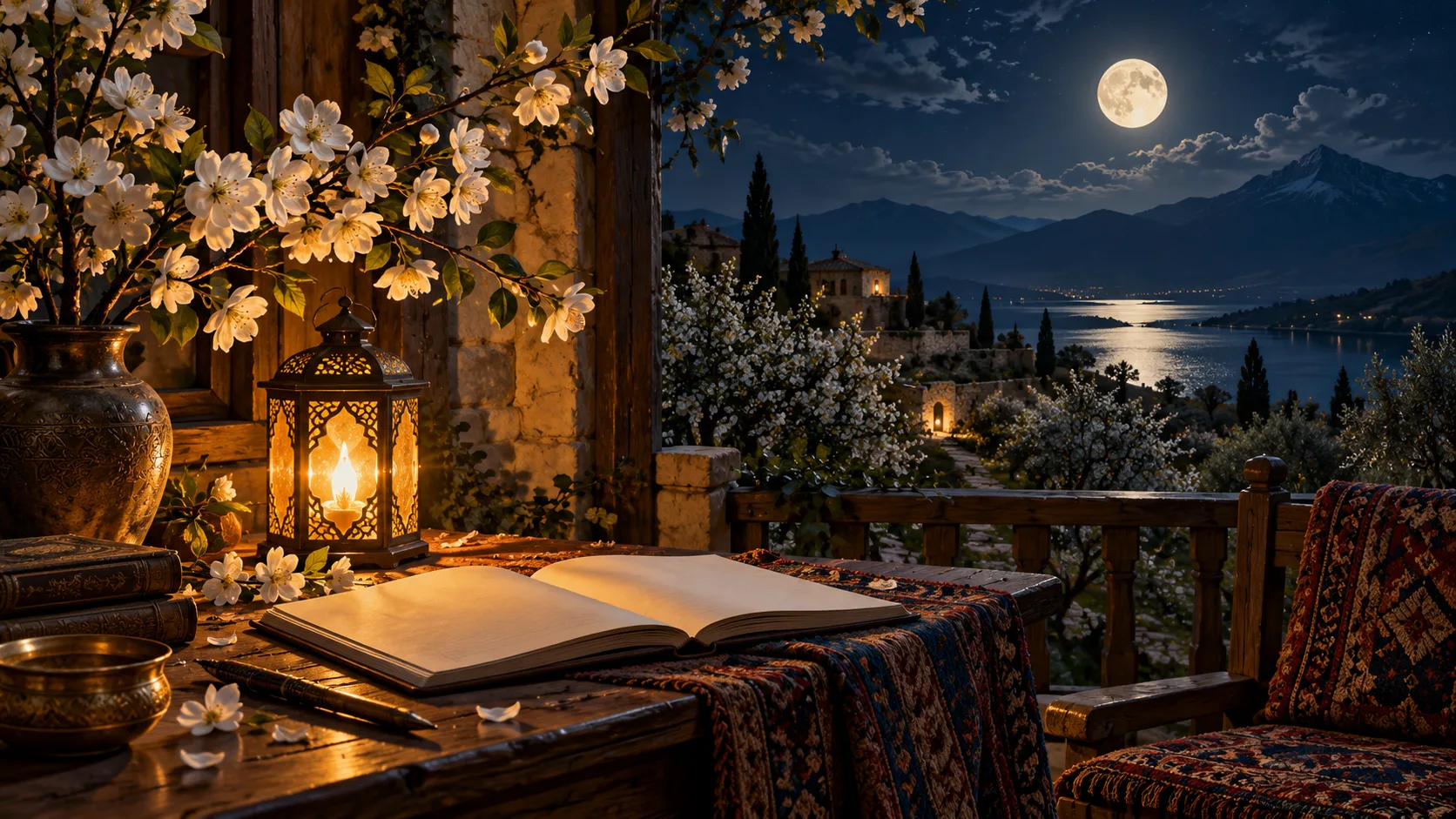
Rainbow and New Songs, both published in 1907, reveal his musical language and delicate imagery. Gardens, villages, night and sunlight are closely connected with inner life and the desire to share in the happiness of others.
Literary legacy
Metsarents's poetry reaches beyond private sadness toward compassion. Its sensitivity to ordinary beauty gives his small literary legacy an enduring emotional range.
The cover and section images are AI-generated symbolic illustrations. The gallery portrait comes from a historical source.
Reading the works closely
Metsarents begins with delicate sensations of light, scent, sound and moving air. Nature expresses a need for warmth and connection rather than serving as decoration. In To the Sun, direct address turns sunlight into a hoped-for source of renewed life. Naming personification is only a beginning; explain why warmth matters to this speaker.
Give Me, Lord opens personal feeling toward other people's suffering. Joy need not drown out another person's pain. His collections Rainbow and New Songs explore richly sensory language. Illness matters in his biography, but not every poem should be reduced to death: the desire for life and generosity is equally important.
Read, reflect and investigate
Make a sensory map of a poem and connect two images with its speaker's feelings. Discuss how someone can enjoy life without overlooking another's difficulty. First paraphrase the poem's idea, then add your own example, clearly separating your contribution from the original text.
This article was created using artificial intelligence.
For suggestions regarding collaboration, content, or the further development of this page, please contact the Armenian Treasures Foundation.
Photography Archive
Gallery
Explore more entries
Back to Writers