
Petros Duryan (1851–1872) transformed youthful longing into some of Western Armenian poetry's most intimate lyrics. Love, solitude and the awareness of death meet in a voice at once fragile and defiant.
Petros Duryan
Person
Type
Life and context
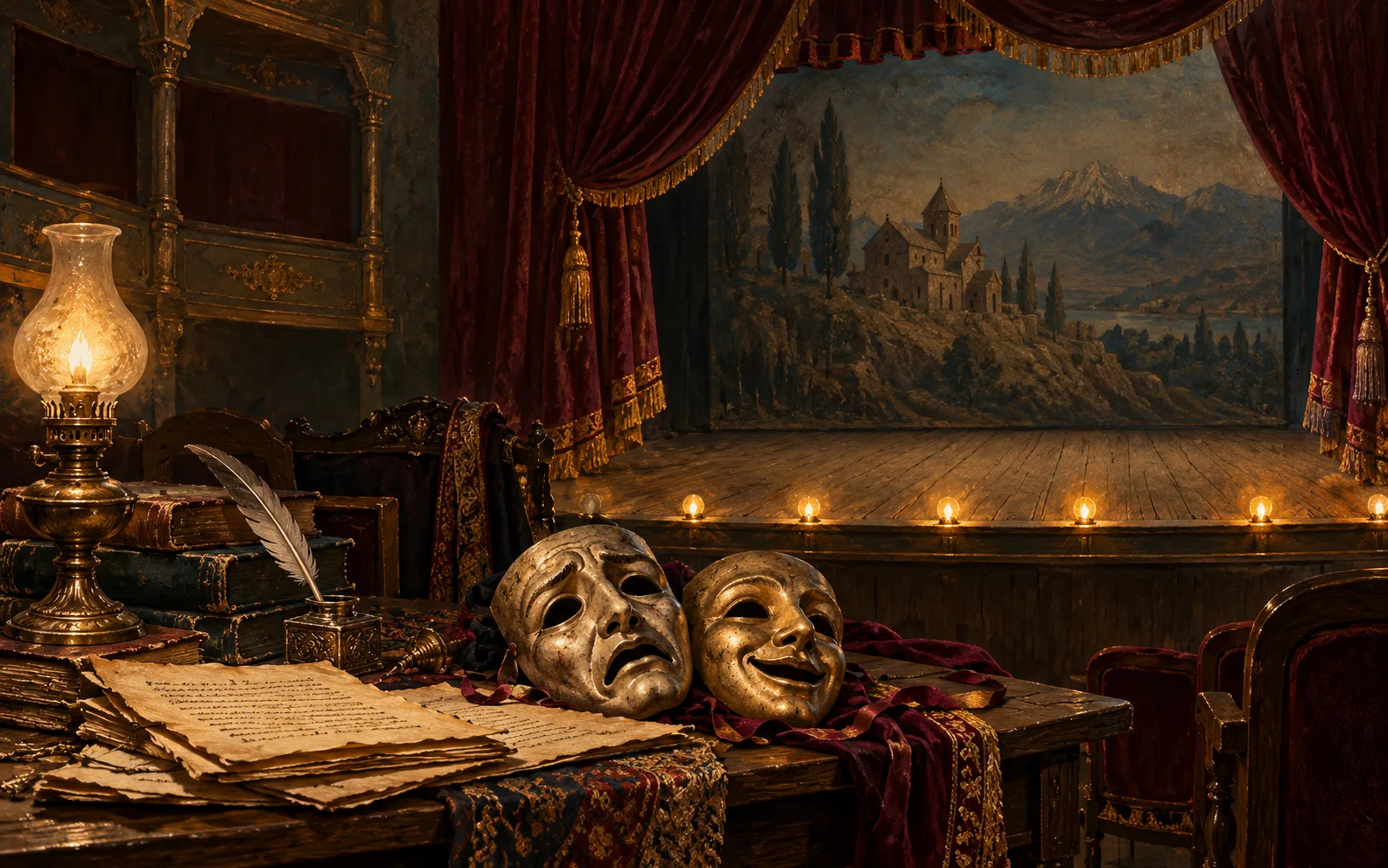
Born in Scutari, across the Bosphorus from Constantinople, he worked in the theatre as an actor and playwright. Poverty and illness shadowed a life that ended at only twenty.
Major works
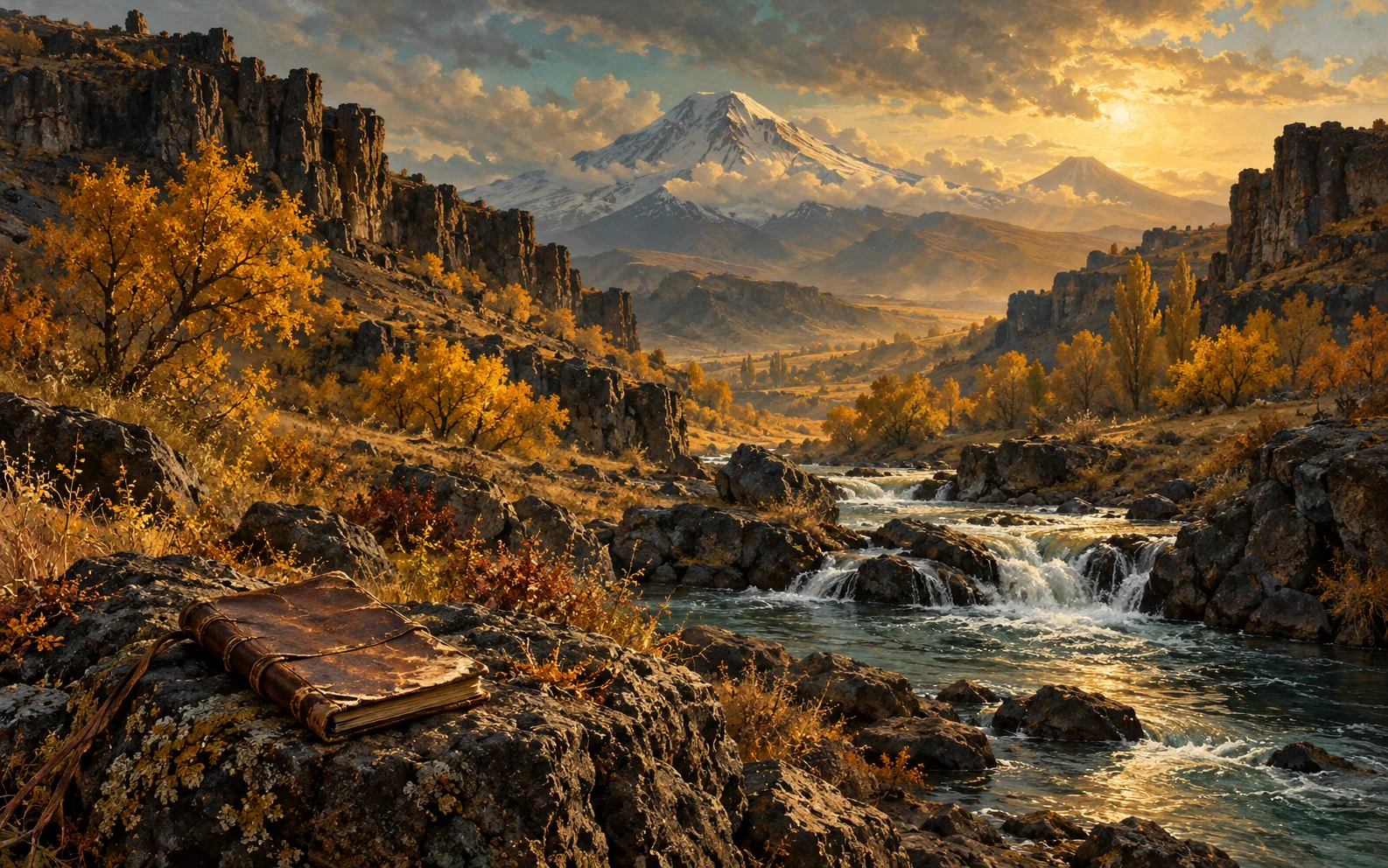
In The Lake and Complaint, nature becomes a partner in inner conflict rather than a decorative setting. His poems move from tenderness to protest, seeking recognition for a life threatened with disappearance.
Literary legacy
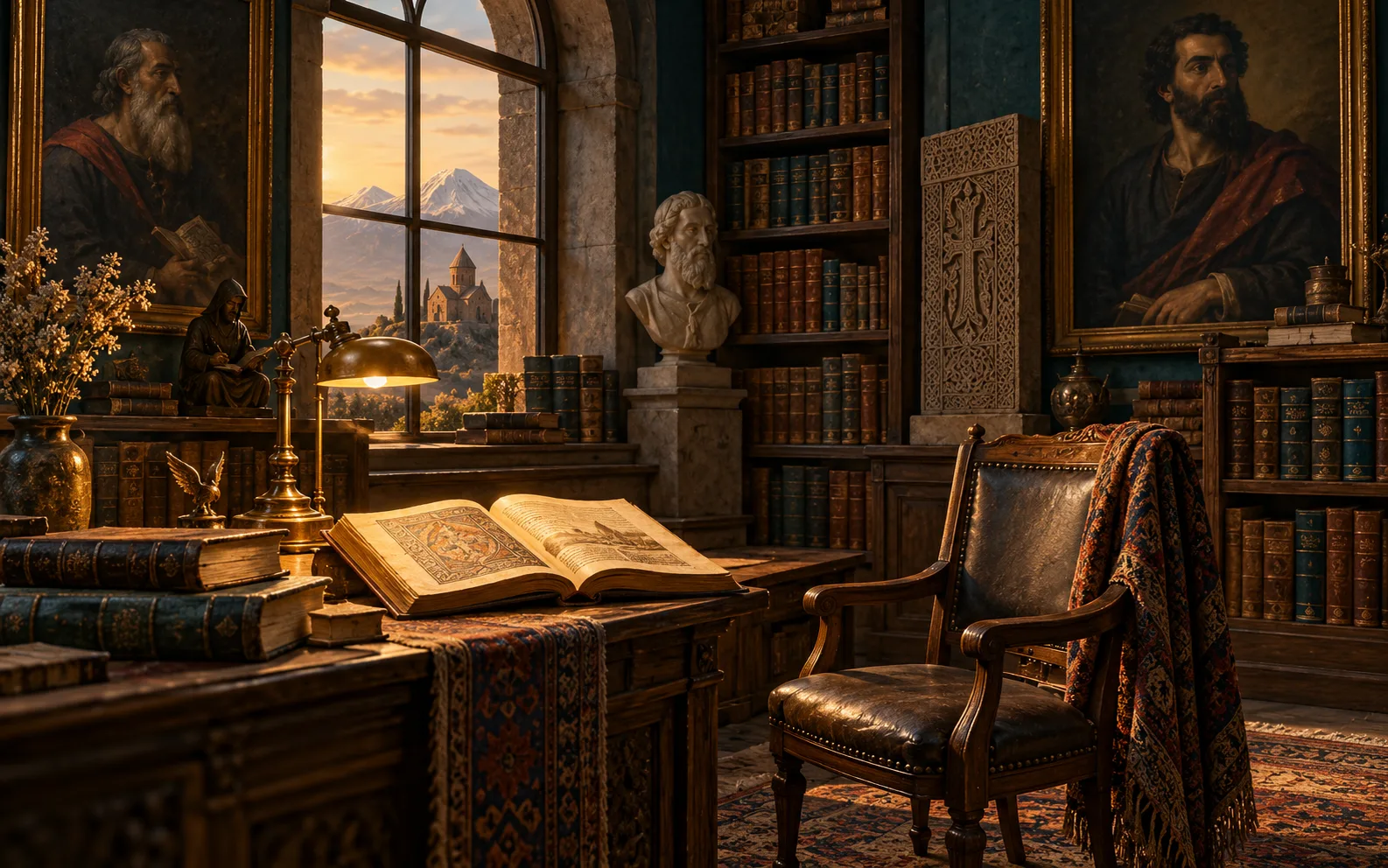
His small body of work helped establish a modern language of personal feeling in Armenian poetry. The generated portrait draws on traditional posthumous imagery; it is not an authenticated likeness. The accompanying scenes are artistic interpretations.
Reading the works closely
Duryan often addresses a beloved, nature or God, turning a poem into an attempt to be heard. Ask whom the speaker addresses and what response is desired. In The Lake, outward calm contrasts with inner turmoil: a reflective surface cannot fully reveal human pain. Nature becomes a partner in expressing isolation.
Complaint intensifies the wish to live through protest and questions. Follow changes in tone rather than treating the whole poem as a single slogan. Duryan's theatre work offers useful context for dramatic speech, but neither his illness nor his short life explains every artistic choice. The poem's speaker is not a literal diary entry.
Read, reflect and investigate
Map external calm and inner disturbance in The Lake. Read a selected passage of Complaint aloud, marking changes of tone. Explain why a question can be stronger than a ready answer. In your report, separate biographical information from interpretation of the lyrical speaker.
This article was created using artificial intelligence.
For suggestions regarding collaboration, content, or the further development of this page, please contact the Armenian Treasures Foundation.
Explore more entries
Back to Writers