
Ruben Sevak (1885–1915), born Ruben Chilingiryan, united the work of a physician with that of a poet and prose writer. His literary world is attentive to bodily suffering, love and human vulnerability.
Ruben Sevak
Person
Type

Life and context
Born in Silivri, he studied medicine in Lausanne and later returned to Constantinople. His medical experience gave him intimate knowledge of lives under pressure. He was murdered during the Armenian Genocide.

Major works
The Red Book brings together poetry shaped by violence and moral protest. In prose associated with From a Doctor's Book, observation of patients becomes an exploration of social conditions and the fragile boundary between despair and compassion.
Literary legacy
Sevak's legacy joins ethical attention with lyrical sensitivity. His work invites readers to see the person behind an illness or a public tragedy, preserving individual experience within collective memory.
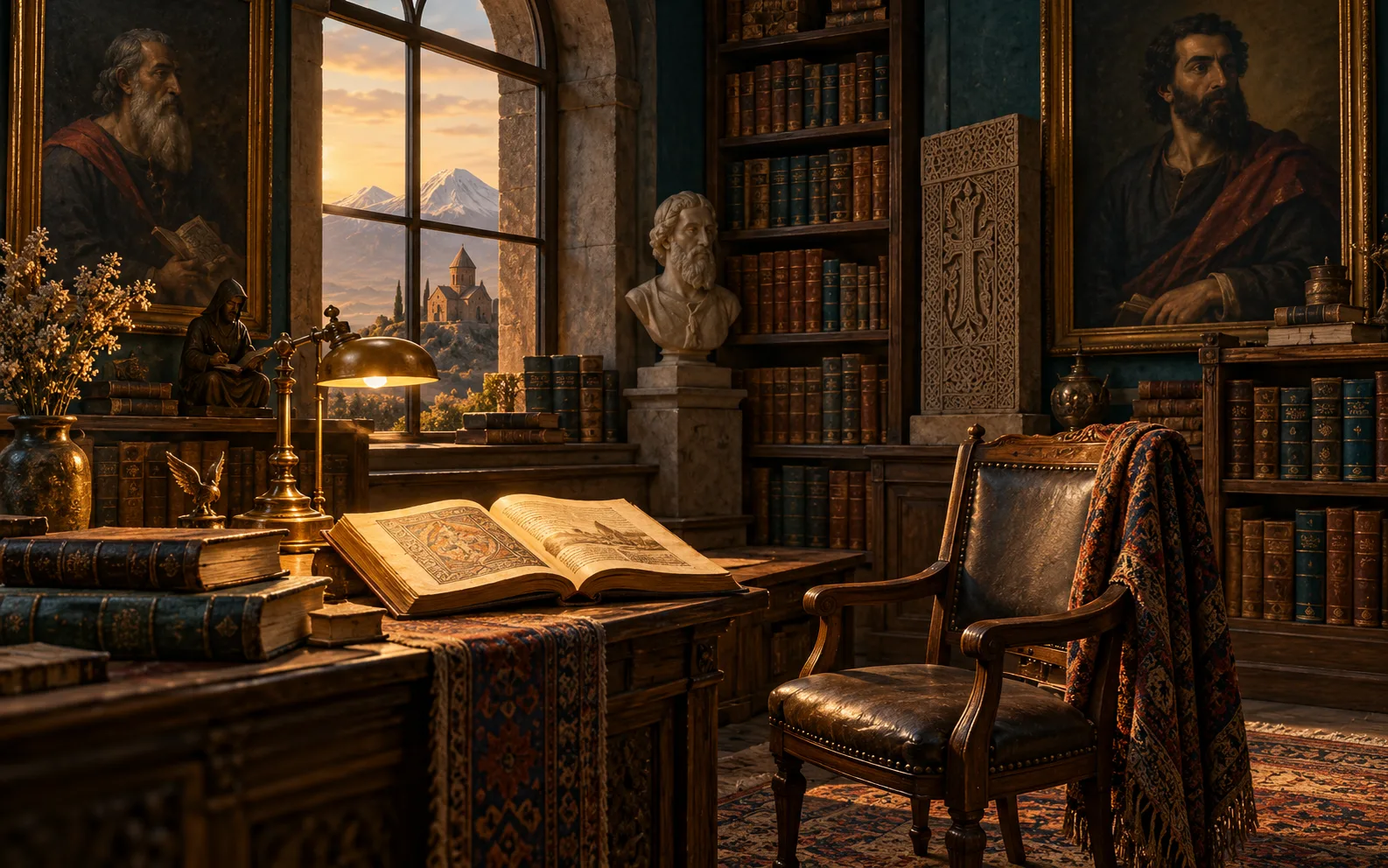
The portrait and accompanying scenes are generated artistic interpretations; they are not historical photographs.
Reading the works closely
Ruben Sevak brings a physician's observation together with poetic sensitivity. In Pages Torn from a Doctor's Book, bodily suffering opens onto fear, isolation and social circumstances. A person is more than a set of symptoms. Read these pieces as shaped literary narratives, not present-day medical instructions.
The Red Book turns poetry toward protest against violence; the title Hymn to Humanity points toward the value of human life. His love lyrics reveal another register of intimacy and longing. Compare tones rather than reducing his entire work to one theme. Remembering his murder in 1915 should not eclipse his creative and professional life. He is a different writer from Paruyr Sevak.
Read, reflect and investigate
In a selected prose passage, distinguish observation, a character's words and the narrator's judgement. Which detail reveals the person beyond suffering? Compare the addressee and tone of a love poem with a public poem. Explore listening as a form of care through literary examples.
This article was created using artificial intelligence.
For suggestions regarding collaboration, content, or the further development of this page, please contact the Armenian Treasures Foundation.
Explore more entries
Back to Writers