The railway and the defence of Sardarapat
A station changes hands twice
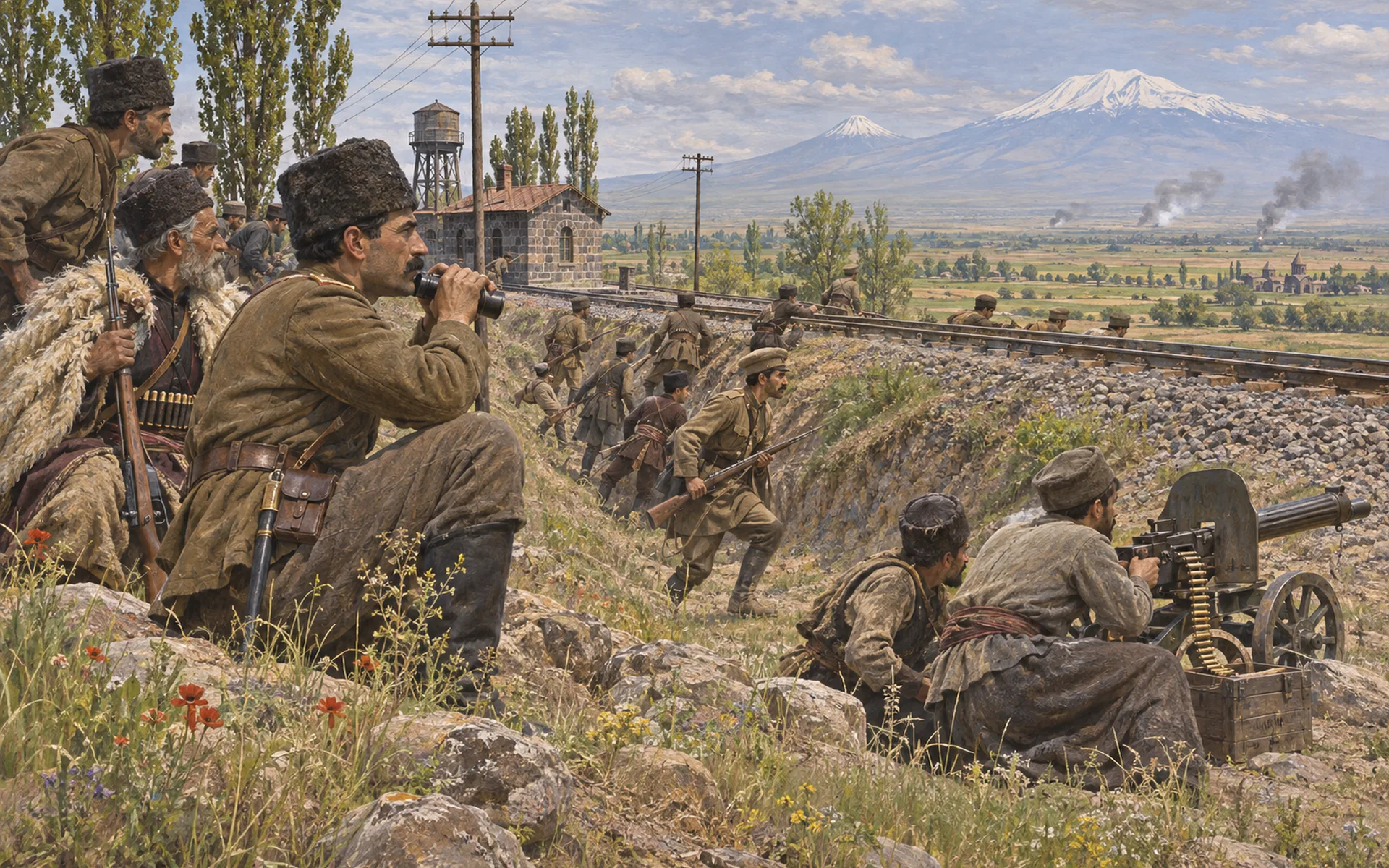
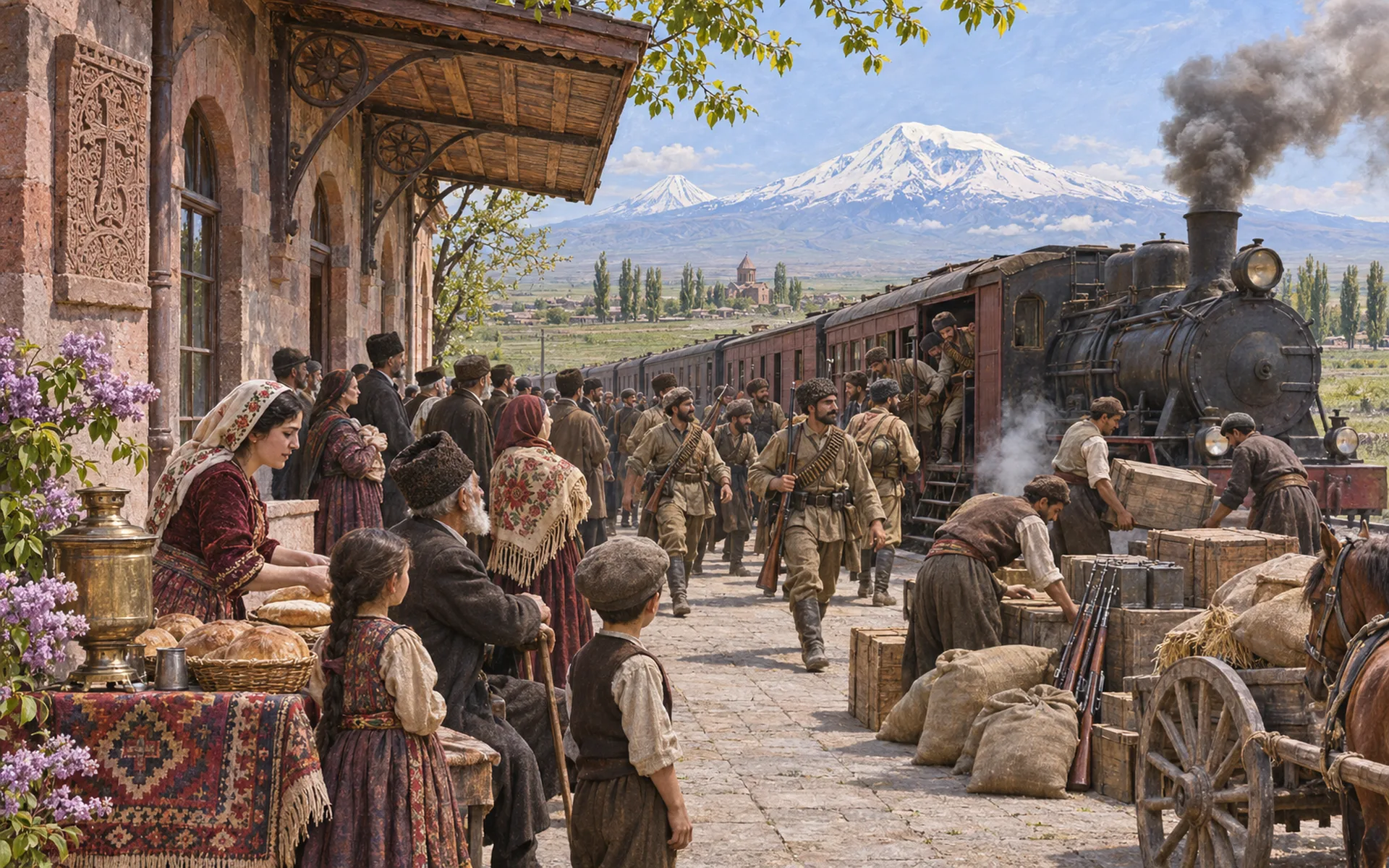
On 21 May 1918, Ottoman forces took the village and station of Sardarapat on the Ararat plain. On 22 May an Armenian counterattack recovered them. If the story ended there, students could reasonably ask why the battle is remembered as a campaign lasting several more days. The answer lies farther along the railway. The retreating troops regrouped near Araks station, where nearby heights offered positions from which to resist another advance. Retaking Sardarapat had opened a possibility; the defenders still had to turn it into lasting protection for the approaches to Yerevan.
Keep those two stations separate as you read. Sardarapat was the place lost and recovered at the start. Araks was associated with the next defensive position. A station, a village bearing its name, and an entire battle named after the locality are three different things. Distinguishing them makes the sequence clearer than memorizing a single victory date.
The front left by the Russian revolutions
The battle took place during the First World War, before the end of the Ottoman Empire and before the establishment of the present Republic of Turkey. In 1917 revolutions transformed Russia, and the Russian imperial army on the Caucasian front disintegrated. Many soldiers left their positions. Armenian units, former imperial servicemen, and volunteers faced the task of holding routes that a much larger military organization had previously defended.
The Treaty of Brest-Litovsk in March 1918 changed the diplomatic setting. Ottoman forces advanced, Kars fell, and on 15 May they entered Alexandropol, now Gyumri. The loss was more than the removal of a name from a map. Junctions, roads, depots, and routes for withdrawing troops and displaced civilians now became exposed. The danger was especially acute for survivors of the Armenian genocide who had already been driven from their homes. For them, the question of whether another road remained open was immediately personal, not an abstract matter of frontiers.
Why the railway mattered on an open plain
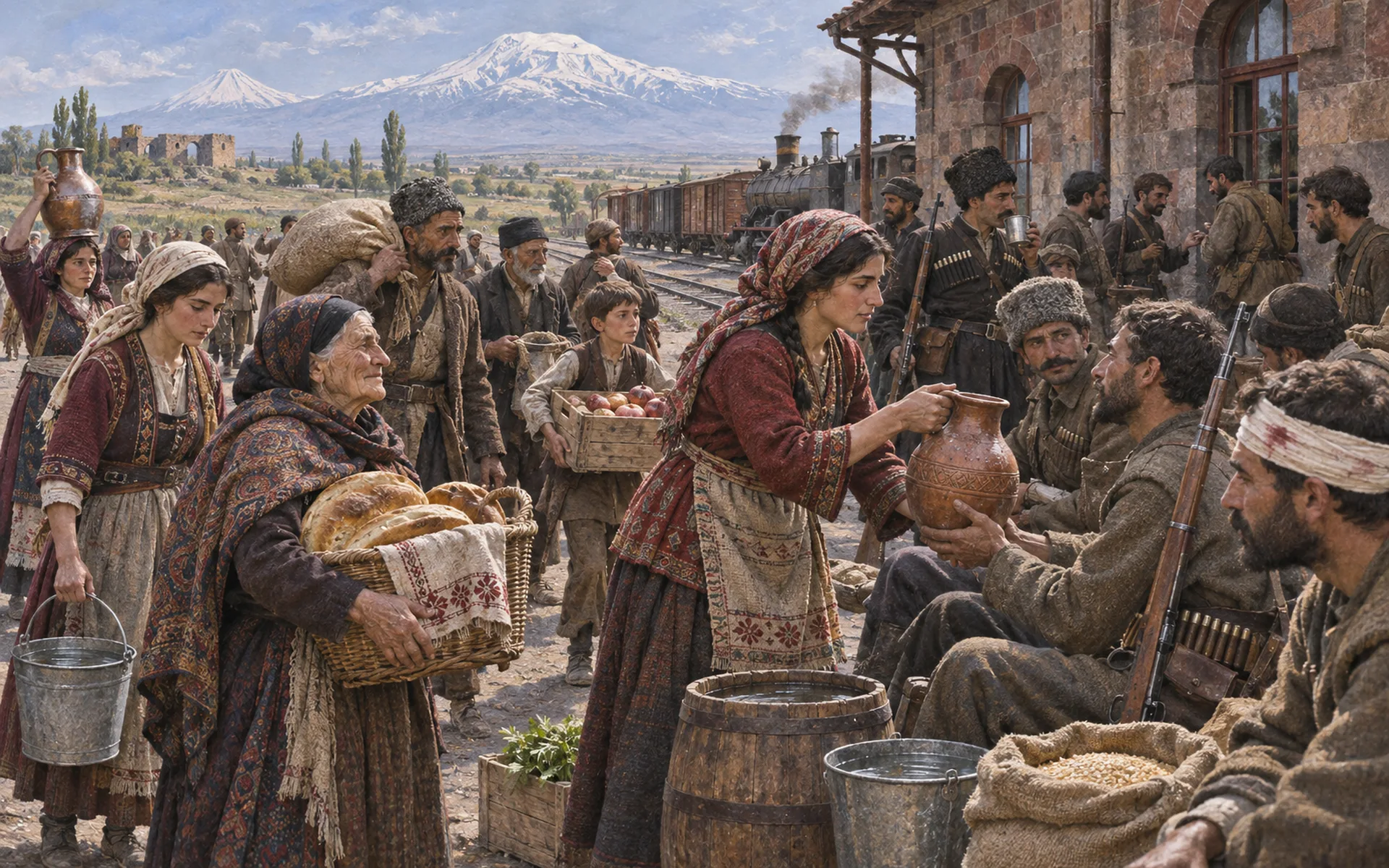
Imagine planning to send a field gun, its ammunition, food for a unit, and wounded people in the opposite direction. Each load poses a different difficulty. A gun requires a usable route; shells are heavy; food must arrive repeatedly; wounded people need space and care. Railway lines and the roads beside them therefore mattered to both armies even when no train could safely run through the fighting.
The Ararat plain offered room for movement, but visibility and nearby raised ground could favor troops defending a particular approach. A railway embankment was a recognizable line in the landscape, and stations provided fixed reference points for giving orders. Capturing a station did not bring the whole plain under control. Units also needed to secure the approaches, observe enemy movements, and remain in touch with neighboring forces.
On a classroom sketch, label locations rather than drawing exact firing positions for which you have no evidence. Mark Alexandropol, Sardarapat, Araks station, and Yerevan, then explain in words why communications linked them.
A chain of command, not one solitary hero
On 16 May, Armenian Corps commander Tovmas Nazarbekian entrusted the defense of the Yerevan region to Movses Silikyan, commander of the Yerevan detachment. Daniel Bek-Pirumyan commanded the Sardarapat group. Poghos Bek-Pirumyan, a different officer, led its Fifth Regiment. The History Museum of Armenia preserves a photograph identified with that regiment. A similar surname can easily produce a serious error: a regiment was part of a larger group, not another name for the whole force.
Aram Manukian played a central civilian organizing role in Yerevan. Catholicos Gevorg V and clergy including Garegin Hovsepyan supported mobilization. Military command, civil organization, and religious encouragement were connected but distinct responsibilities. Calling every prominent figure the commander of the battle obscures the work each actually performed.
Draw three boxes for the corps, the Yerevan detachment, and the Sardarapat group. Add the regiment below them. Place civilian and religious leaders beside the diagram, not inside a military chain of command they did not occupy.