Sayat-Nova was an eighteenth-century ashugh whose poetry belongs to the shared cultural world of the Caucasus. Love, human dignity and the tensions of everyday life give his songs their enduring force.
Sayat-Nova
Person
Type
Life and context
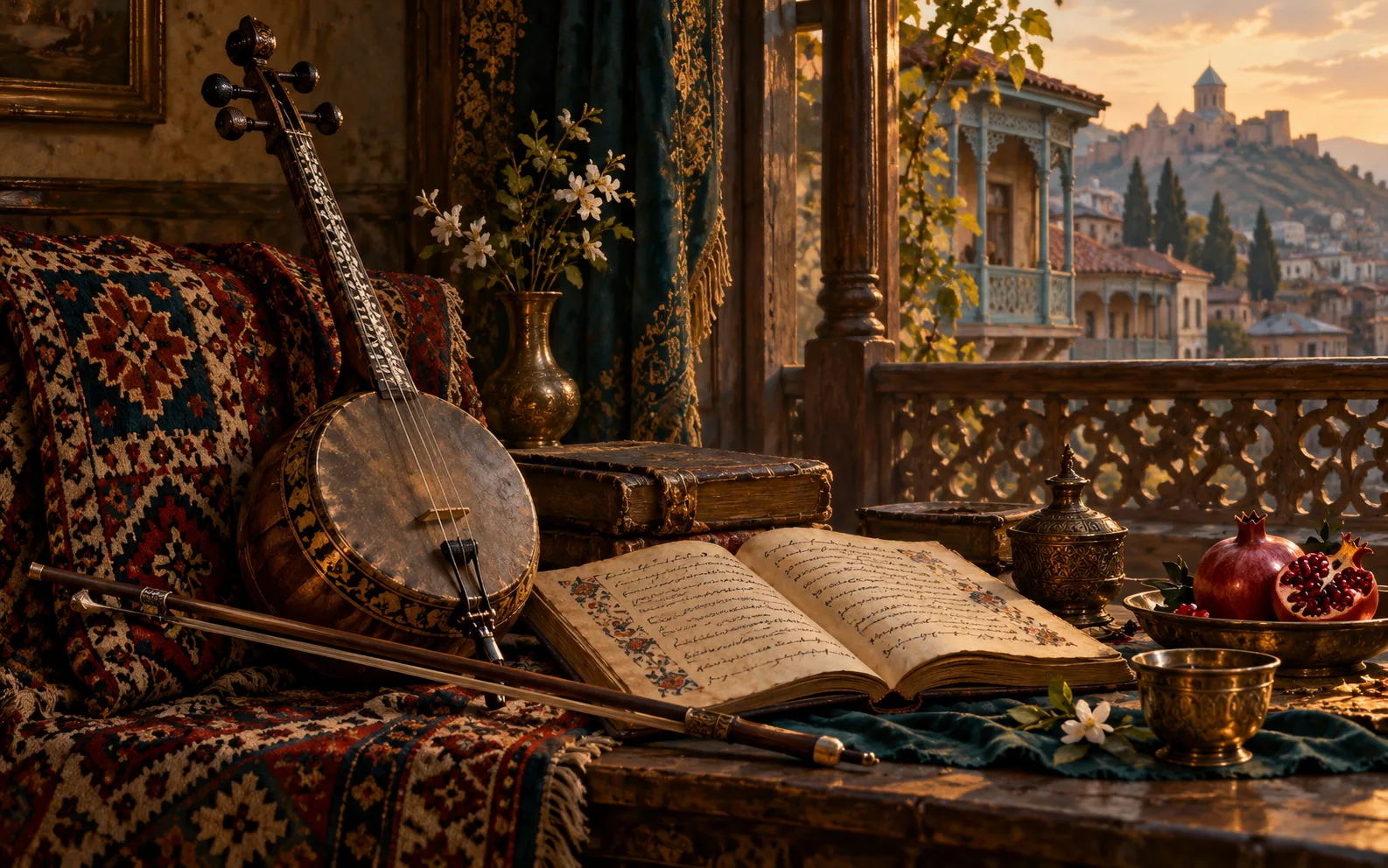
His life was closely connected with Tiflis and the court of King Heraclius II. Writing in Armenian, Georgian and Azerbaijani, he moved between languages without losing the intimacy of his poetic voice.
Major works
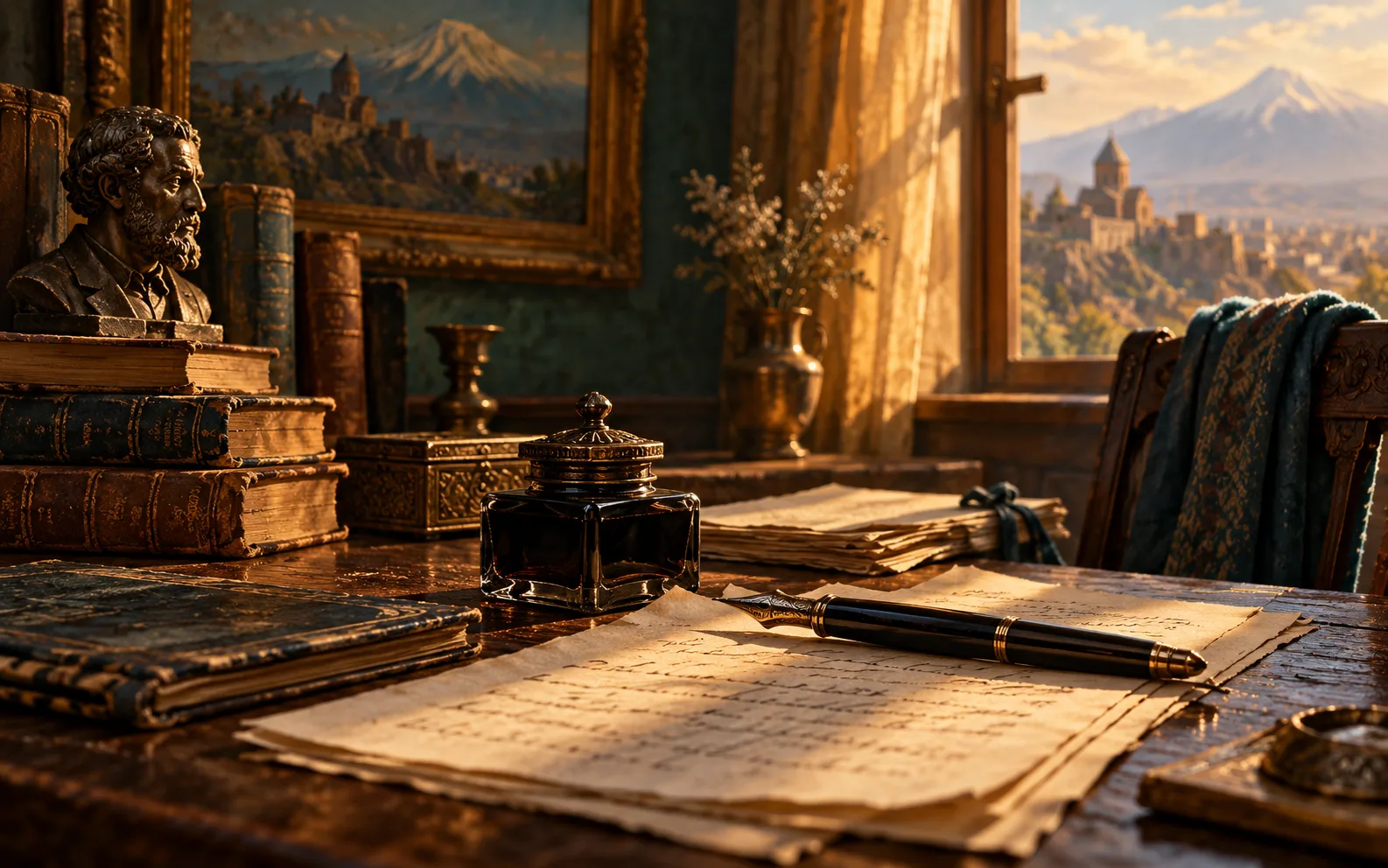
His surviving songbook, or davtar, is central to the study of his work. Elaborate rhyme, repetition and musical rhythm turn the beloved into an image through which desire, devotion and wisdom can speak.
Literary legacy
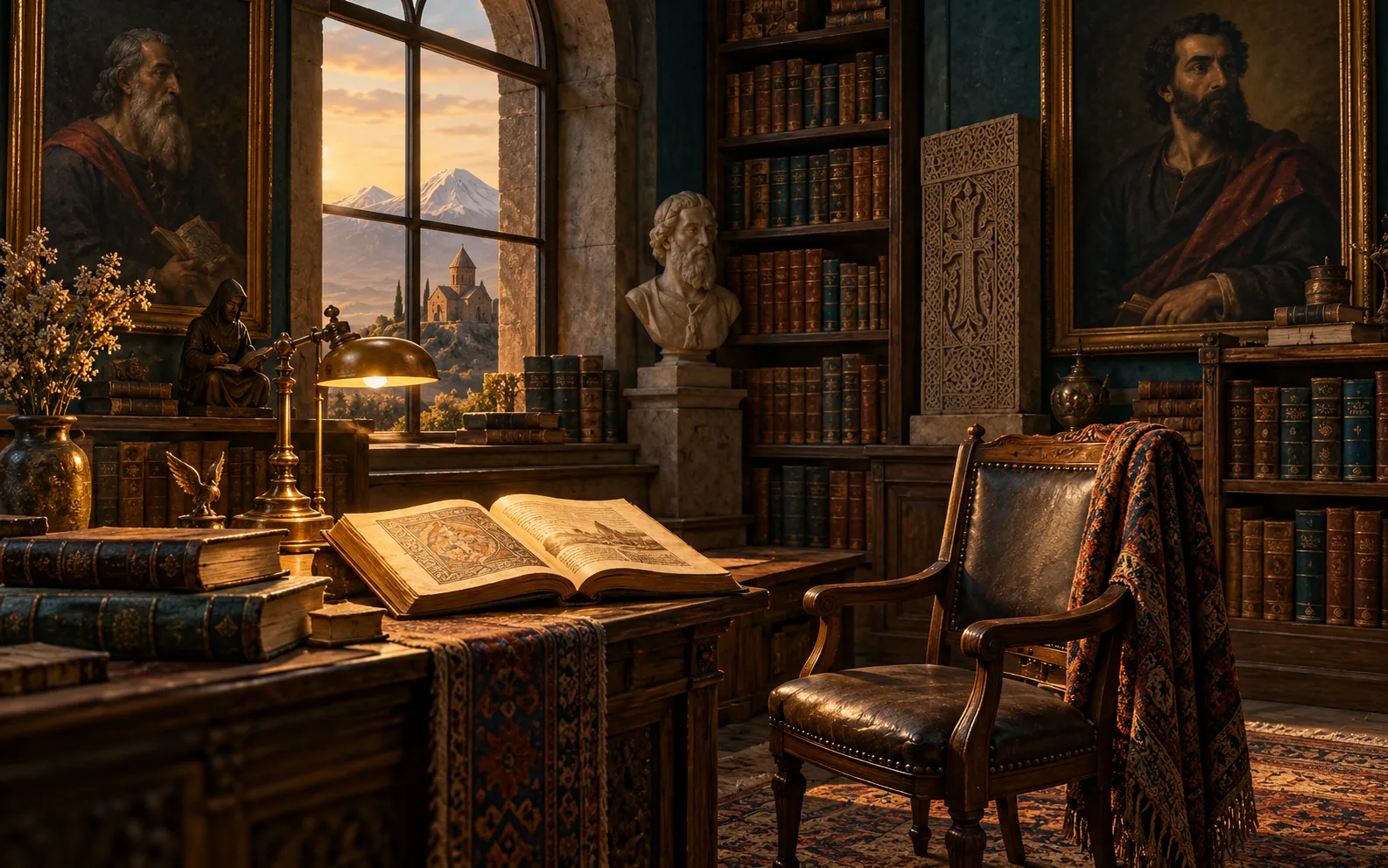
His poems remain alive through reading and performance. They link Armenian literature with a multilingual urban tradition. The portrait and scenes are generated artistic interpretations, not historical photographs.
Reading the works closely
Sayat-Nova belongs to the ashugh tradition, where poetry, melody, performance and audience interact. Reading reveals only part of this art. Repetition and rhyme help a line become memorable in song. Images of jewels, flowers and light express the beloved's value to the speaker rather than literal appearance. Praise can turn into longing or pain.
His Armenian, Georgian and Azerbaijani songs reflect a multilingual Caucasian urban world. The handwritten davtar, a printed edition and a modern performance are different kinds of sources. Performers reshape emphasis and mood. Romantic stories about the poet's life should be identified as traditions when their historical basis is uncertain.
Read, reflect and investigate
Read a song, clarify unfamiliar words, then listen to it. Explain two metaphors and note where melody changes your response. Compare two performances by pace, emphasis and mood, identifying their performers. Keep authorship distinct from a modern singer's interpretation.
This article was created using artificial intelligence.
For suggestions regarding collaboration, content, or the further development of this page, please contact the Armenian Treasures Foundation.
Explore more entries
Back to Writers