Siamanto (1878–1915), born Atom Yarchanyan, brought a visionary intensity to Western Armenian poetry. His work joins collective suffering to the determination to survive and resist.
Siamanto
Person
Type
Life and context
Born in Agn, he studied in Constantinople and later lived in European cities, including Geneva and Paris. Displacement and the violence directed against Armenians shaped his poetic imagination. He was killed during the Armenian Genocide.
Major works
Heroically and Armenian Sons give his poetry a public, exhortatory voice. Bloody News from My Friend responds to the 1909 massacres in Cilicia, transforming testimony into disturbing poetic images rather than detached narration.
Literary legacy
His long, forceful lines enlarge the possibilities of Armenian poetic rhythm. Reading Siamanto means encountering a writer who insists that suffering be heard without allowing hope or human dignity to disappear.
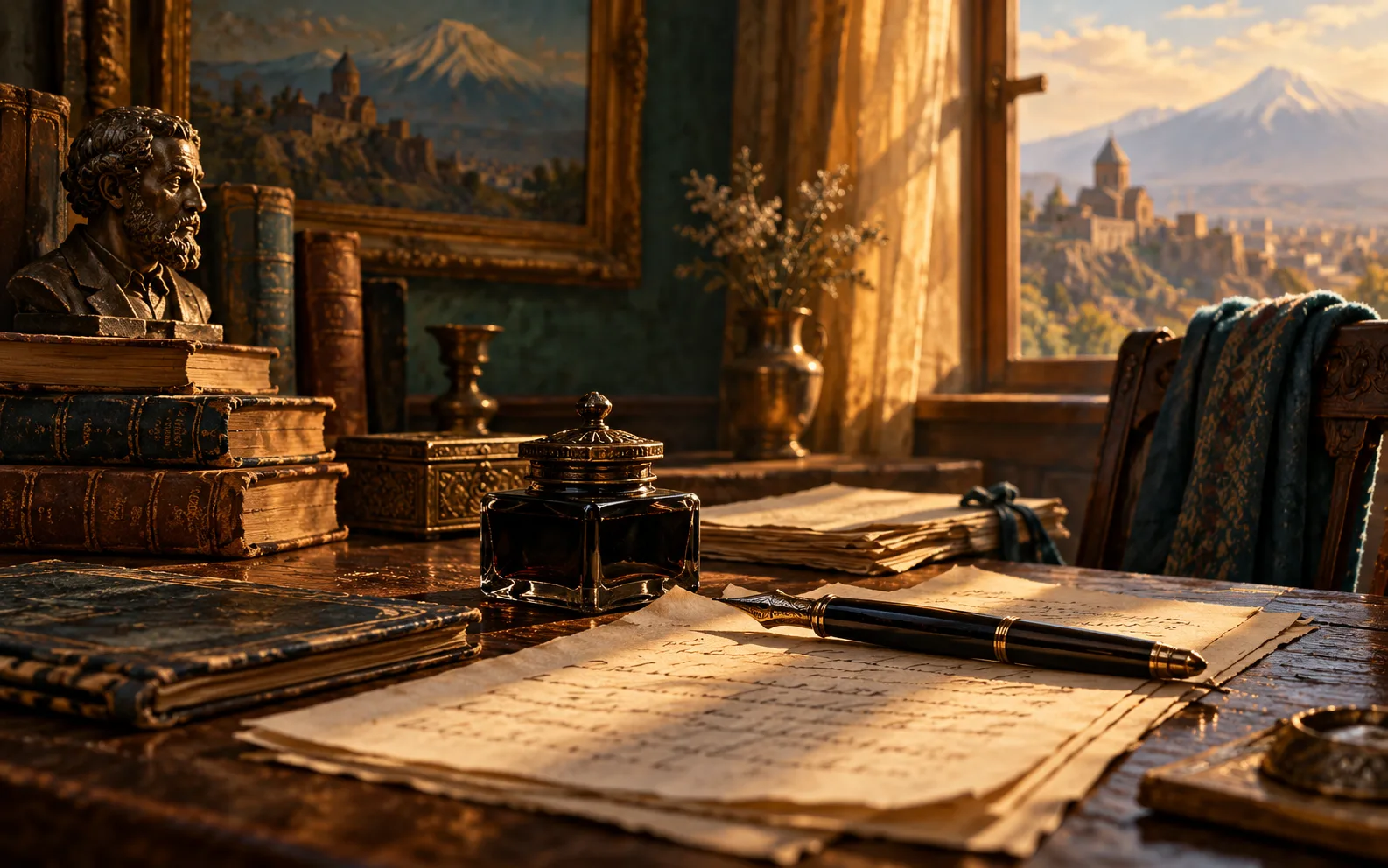
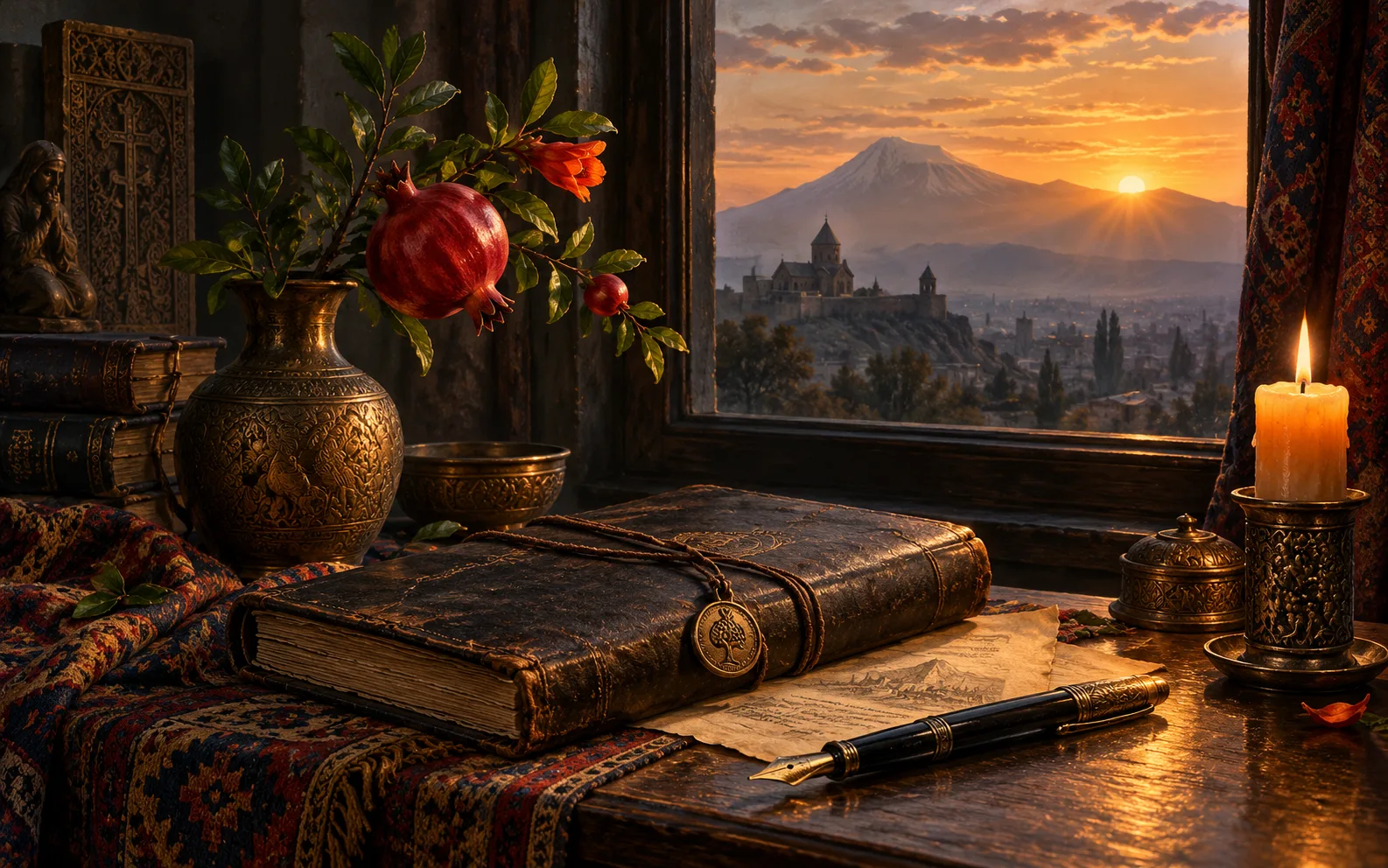
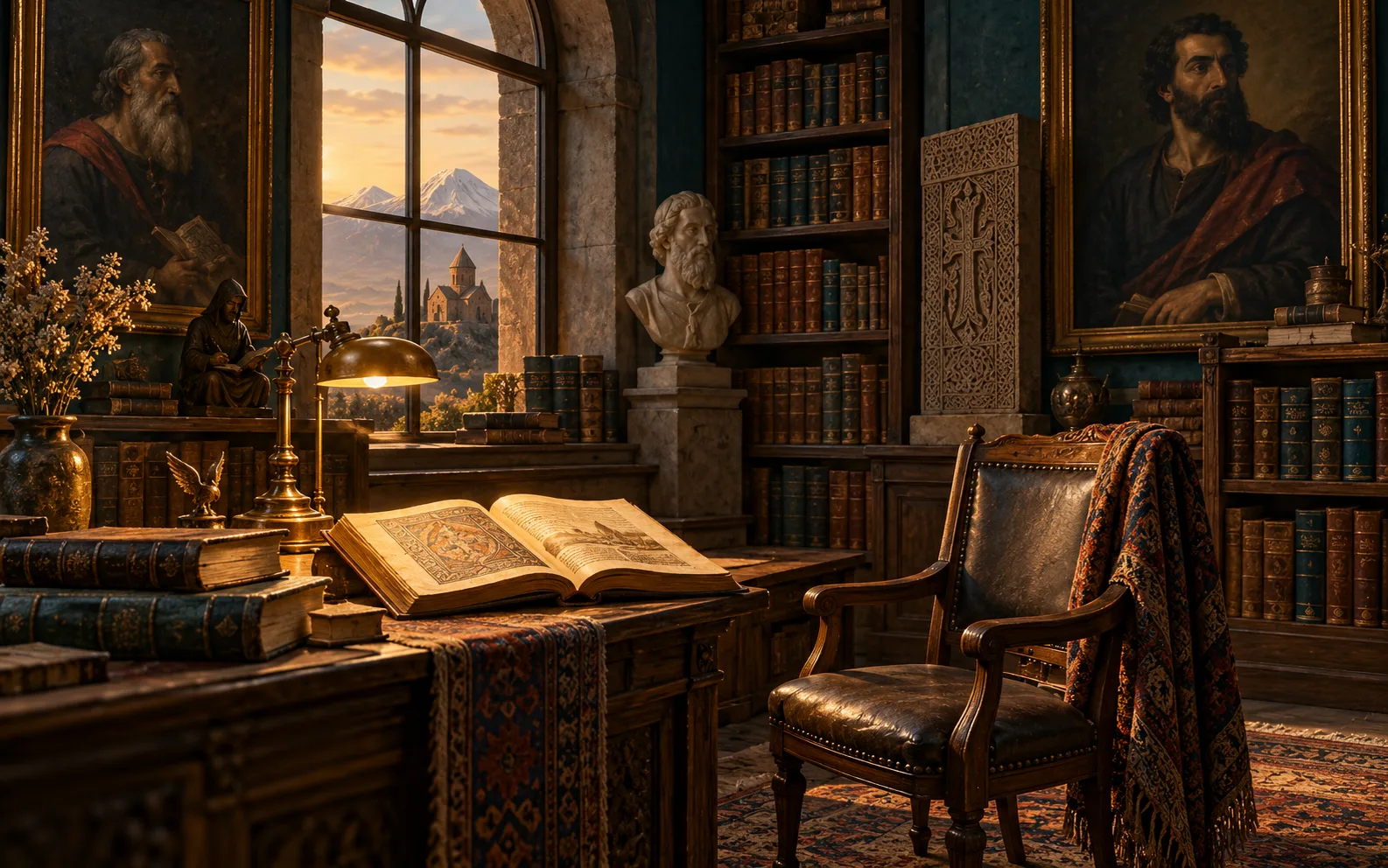
The portrait and accompanying scenes are generated artistic interpretations; they are not historical photographs.
Reading the works closely
Siamanto's long lines, repeated appeals and intense images create a public voice demanding to be heard. Bloody News from My Friend responds to the 1909 violence in Cilicia. Its title joins transmitted news with a personal relationship; poetry reshapes testimony into image and address rather than a neutral chronology.
Torches of Agony and Hope places suffering and hope in tension: hope does not require forgetting pain. Follow light, fire and darkness within each poem instead of assigning them fixed meanings. Saint Mesrop opens a related question about language and cultural continuity. Remembering the writer killed in 1915 also means studying his creative achievement, not only his death.
Read, reflect and investigate
For older students, read a teacher-selected passage and identify speaker, addressee and purpose. Find a repetition that intensifies the appeal. Compare a factual account with the poetic response: what does poetry add, and why does it not replace historical verification? Keep human dignity central.
This article was created using artificial intelligence.
For suggestions regarding collaboration, content, or the further development of this page, please contact the Armenian Treasures Foundation.
Explore more entries
Back to Writers