Vahan Tekeyan (1878–1945) gave Western Armenian lyric poetry a restrained and reflective voice. Love, loss, faith and the work of memory unfold through carefully balanced language.
Vahan Tekeyan
Person
Type
Life and context
Born in Constantinople, he spent an important part of his life in Egypt. Alongside poetry, he worked as an editor and educator, sustaining Armenian cultural life across borders and through historical upheaval.
Major works
Poems such as The Armenian Church, Reckoning and Your Memory Tonight reveal the range of his concerns. Intimate recollection and communal belonging meet without erasing doubt, solitude or the complexities of affection.
Literary legacy
Tekeyan's precision made inward reflection a durable form of cultural continuity. His poems offer a quiet encounter with the relationship between personal experience and the survival of a language and community.
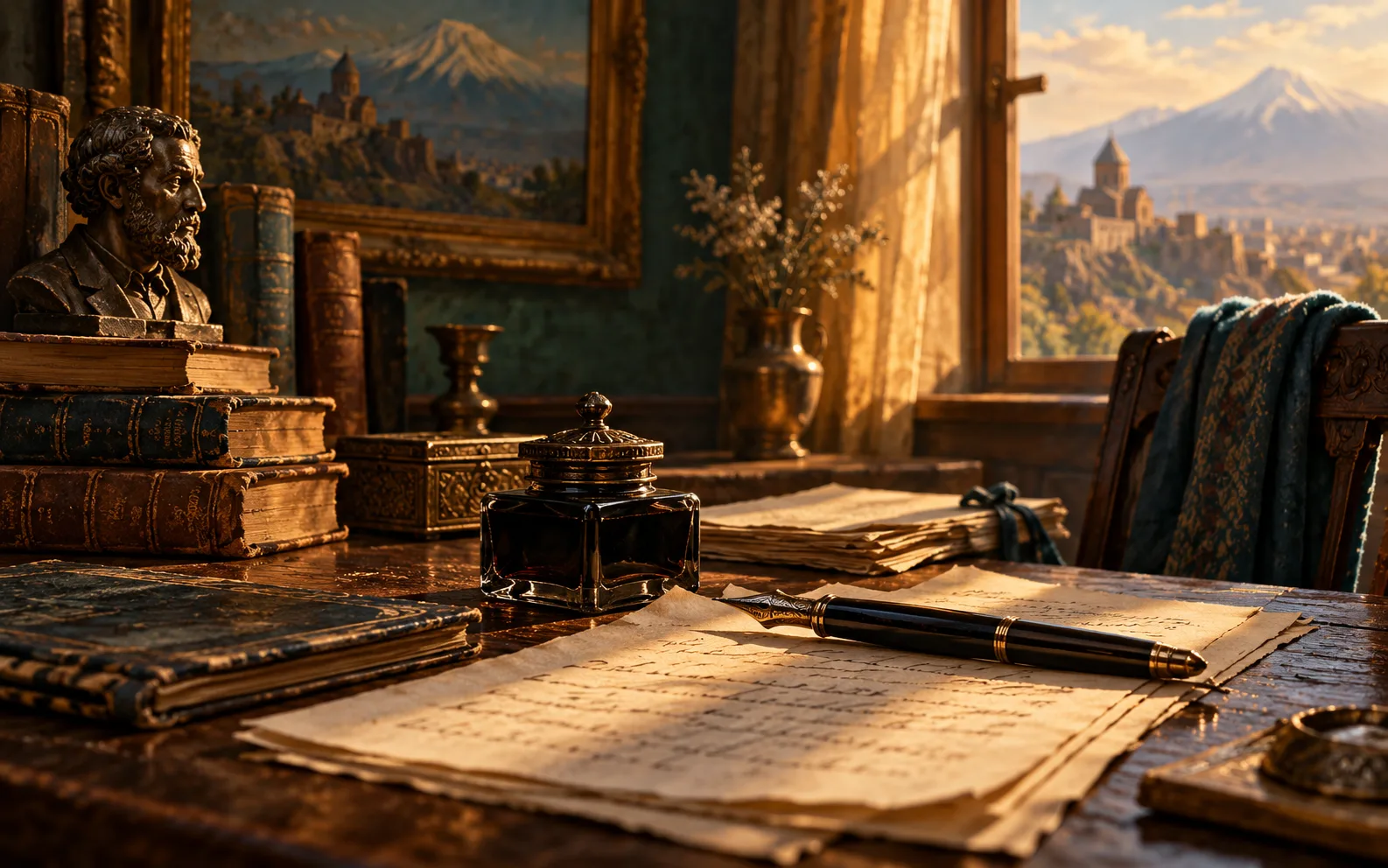
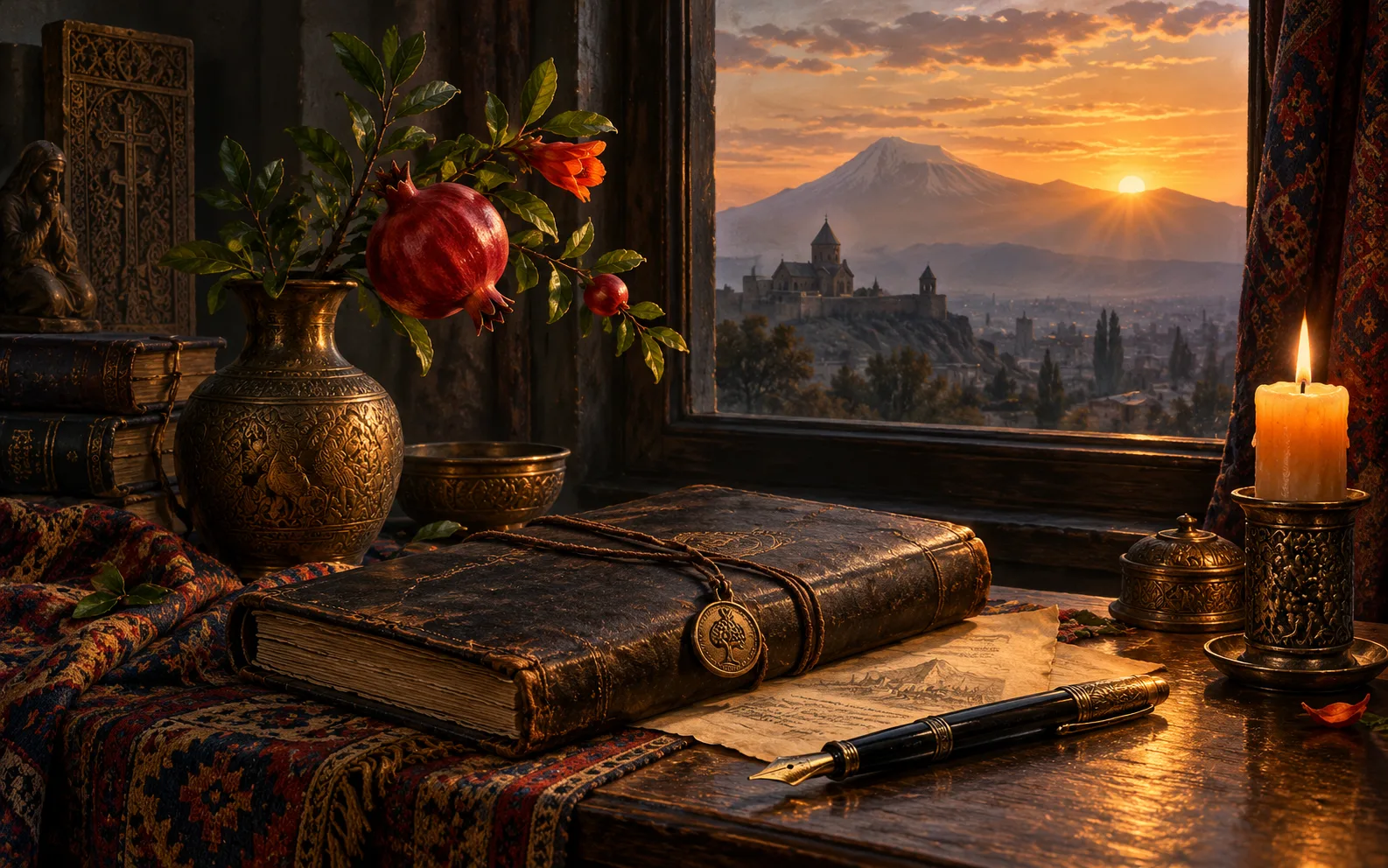
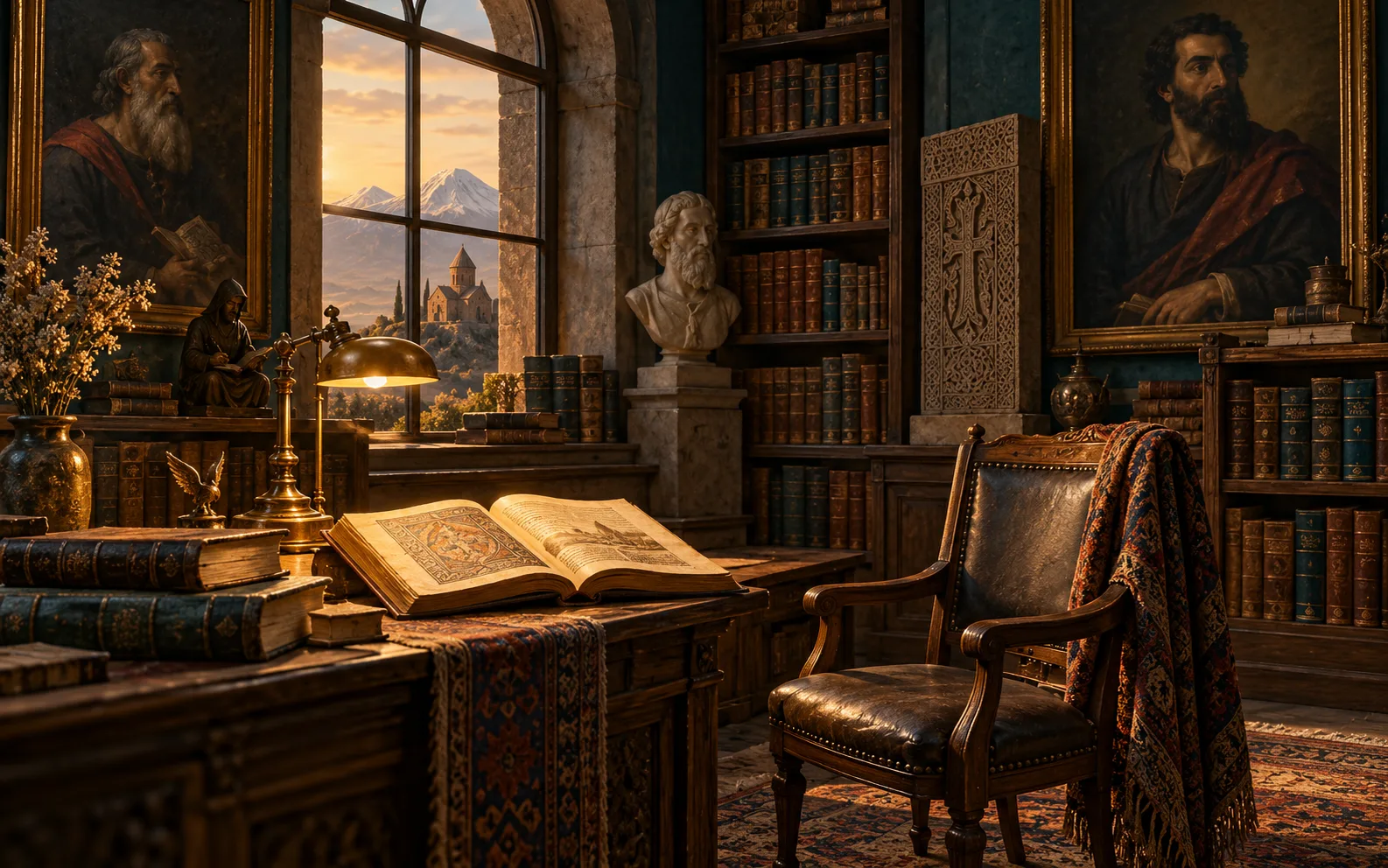
The portrait and accompanying scenes are generated artistic interpretations; they are not historical photographs.
Reading the works closely
Tekeyan often carries intense feeling in restrained language. A returning question or image can deepen emotion without a raised voice. Reckoning turns the idea of settling accounts toward the value of a life, moving beyond possessions toward giving and human connection.
In Your Name, a few sounds can hold the presence of someone absent. Speaking a name and keeping it private create a tension between memory and intimacy. The Armenian Church can also be read as an image of communal continuity, alongside its religious meaning. Tekeyan's educational and editorial work shows that writing in diaspora both preserves inheritance and creates new readers for a living language.
Read, reflect and investigate
Answer the central question of Reckoning in your own words, then compare your values with the poem's. Explain how a name carries memory and what repetition contributes. Compare Tekeyan's restrained voice with Siamanto's public appeal: how do different forms reach the reader?
This article was created using artificial intelligence.
For suggestions regarding collaboration, content, or the further development of this page, please contact the Armenian Treasures Foundation.
Photography Archive
Gallery
Explore more entries
Back to Writers