
Yeghishe Charents expanded the language and forms of Armenian poetry. Intimate lyric, urban energy, revolutionary hope and historical reflection coexist in an oeuvre that resists a single label.
Yeghishe Charents
Person
Type

Life and context
Born Yeghishe Soghomonyan in Kars in 1897, he began publishing as a teenager. His career later included influential editorial work in Yerevan. Arrested during the Stalinist repression of 1937, he died that November in a prison hospital; his burial place remains unknown.
Major works
Tagharan reworks inherited lyrical traditions in a modern voice. The novel Land of Nairi examines a provincial city, its illusions and historical catastrophe through an unstable, often ironic narrator. Book of the Road turns toward history, cultural continuity and the responsibilities of the poet.
His changing styles matter: they record an artist testing what language can express under the pressure of a changing world.

Literary legacy
Charents belongs to Armenian literature both as an innovator and as a witness to the vulnerability of artistic freedom. Reading across different periods of his work reveals tensions that a single patriotic or revolutionary poem cannot represent. His Yerevan house-museum preserves that larger creative world.
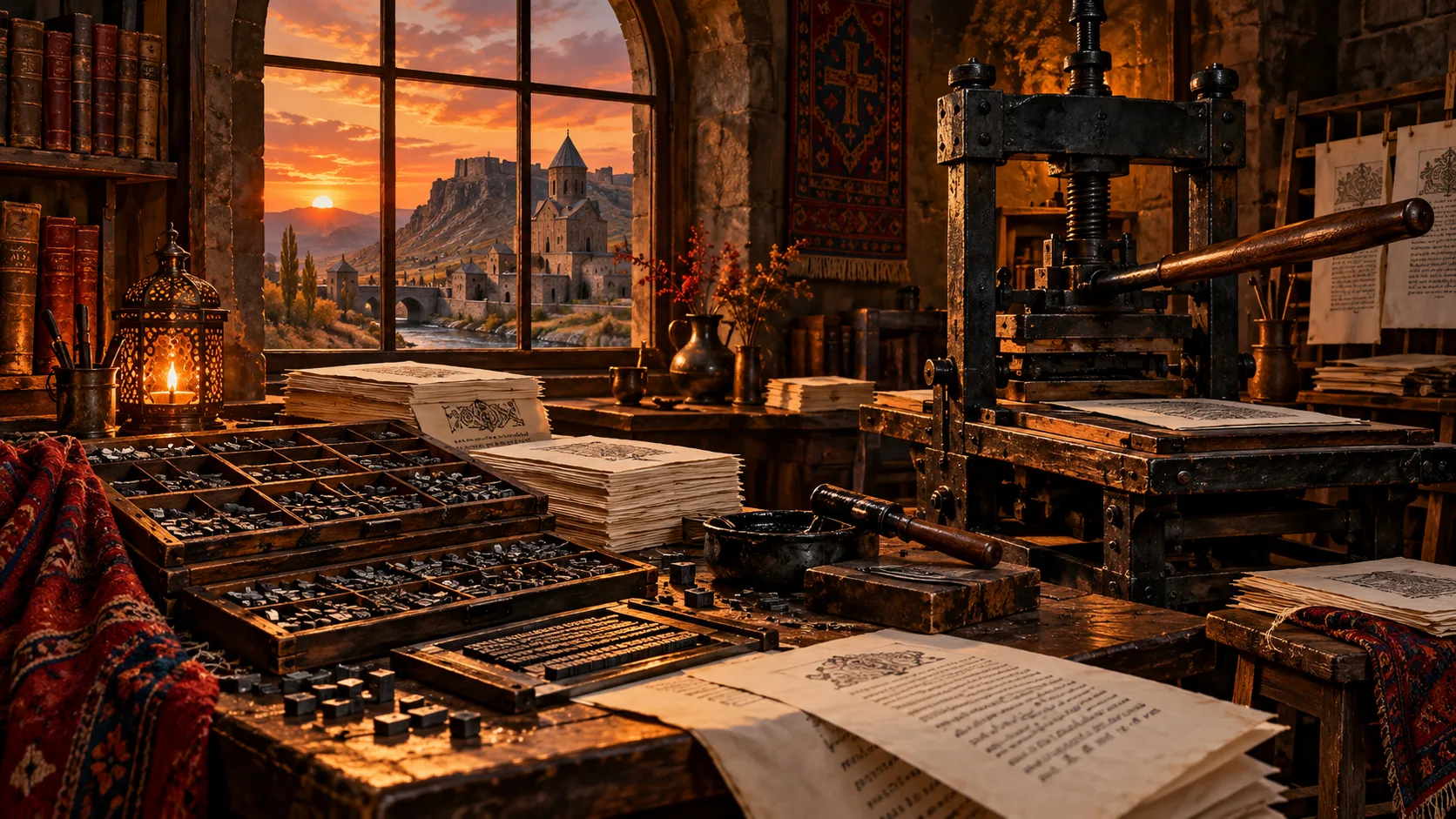
The cover and section images are AI-generated symbolic illustrations. The gallery portrait comes from a historical source.
Reading the works closely
Charents changes poetic forms and voices across his career: intimate lyric, revolutionary energy, satire and reflection on the Armenian past coexist. In I Love My Sweet Armenia, language, song, landscape and memory build the homeland as a cultural world, not merely a territory.
The narrator of the novel Land of Nairi often uses irony: grand claims can be undermined by revealing details. Ask whether a statement is literal and how public rhetoric differs from everyday reality. Book of the Road reopens dialogue with Armenian literary inheritance. Read each work in context; an isolated line cannot represent the whole career, and the repression of 1937 was not simply a literary disagreement.
Read, reflect and investigate
Map the poem's images under language, music, landscape and memory. For older readers, choose an ironic passage from Land of Nairi and distinguish what the narrator says from what the reader understands. Compare the meaning of 'Nairi' in Charents and Teryan using specific passages.
This article was created using artificial intelligence.
For suggestions regarding collaboration, content, or the further development of this page, please contact the Armenian Treasures Foundation.
Photography Archive
Gallery
Explore more entries
Back to Writers